“Intimate yet never intrusive”
How do you provide good care within a sick institution? That is the question Nicolas Peduzzi’s third feature documentary, On the Edge (original title: État limite), explores, highlighting the underfunded and understaffed Beaujon public hospital in Clichy, a suburb of Paris, France. 34-year-old Jamal Abdel Kader navigates between all units as the sole psychiatrist within the building, which includes fifteen specialities and an emergency department. While following the daily routines of Jamal and his colleagues—including nurse’s aide Romain, interns Alice and Lara, and trainee Ayman—it appears as if the staff all more or less carry the burden of feeling that whatever they do, it’s rarely enough.
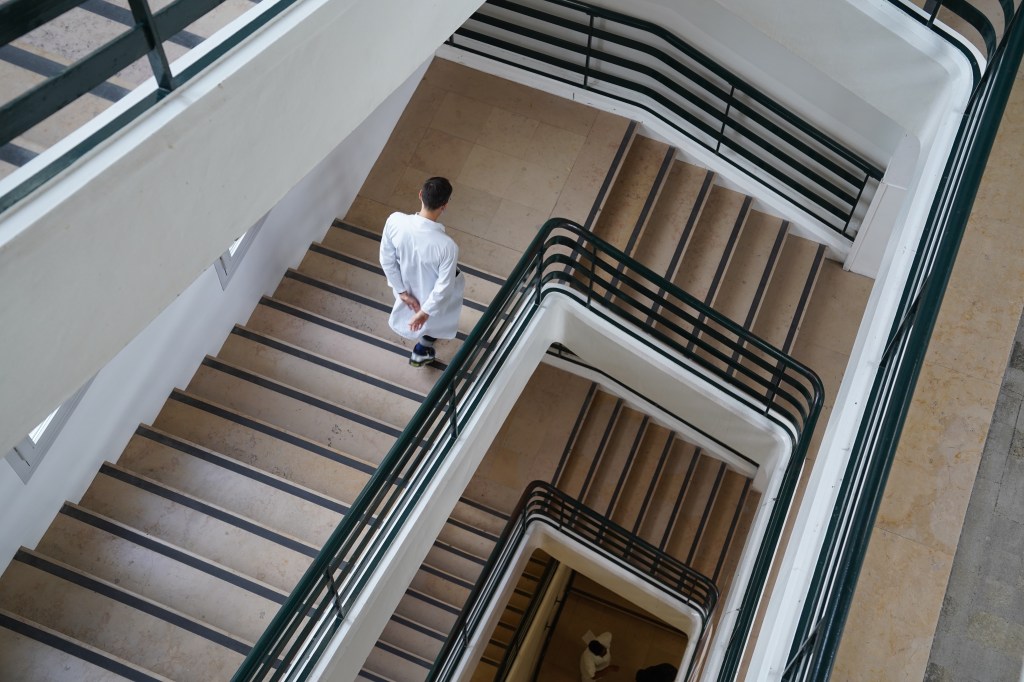
Almost always on the move, Jamal advances across the 400-bed hospital’s many corridors and stairs to care for his patients, several of whom are referred to him after being admitted for other ailments. One patient fears the sight of nearby open windows, afraid that he can’t resist the impulse to jump; another patient, who miraculously survived a drug-fueled suicide attempt, is forced to face her sisters’ anger and disappointment concerning her actions. Some patients are hostile and require restraining and sedation as a last resort when everything else has failed; others are apathetic in their suffering, embodying versions of hopelessness that are nothing short of heartbreaking to witness.
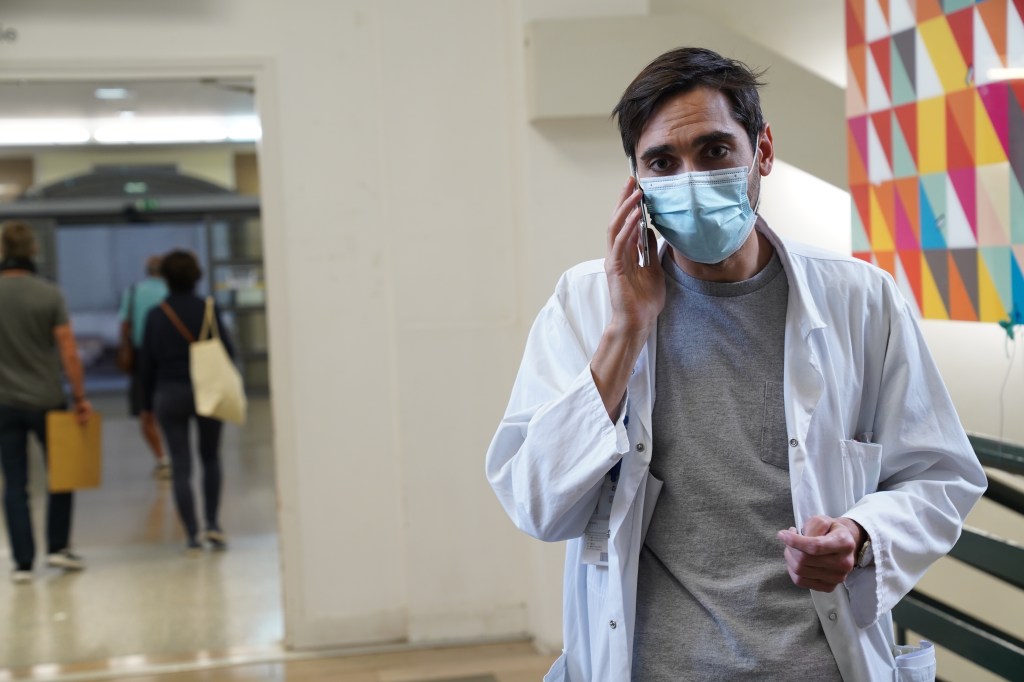
It doesn’t take long for it to become apparent that Jamal is a sympathetic person caught in the conflict between realism and idealism. He argues that what he does through his work—namely, building relations and trust—is something one can’t predict in time. Since the management favours profitability and quantity over quality in their results instead of the important albeit more time-consuming (and thus undesirable) work of psychiatrists, psychiatry is often the first department to be hit by downscaling and budget cuts. Few people are ready to sacrifice their well-being for their ideals, but Jamal genuinely wants his patients to flourish both within and beyond the hospital. Thus, he tries to connect with them in any way he can, listening with compassion whilst offering to play video games and discuss medical TV series (Scrubs is his favourite), but also by organising theatrical group therapy sessions. In an environment—and world—where it’s easy to be bitter, take shortcuts and misdirect the blame, doing neither is commendable.
Intimate yet never intrusive, the camera itself evokes the kind of compassion expressed by Jamal. Sometimes it offers imposing close-ups; other times personal conversations between doctor and patient are caught in reflections and open doorways as if trying to convey respect for privacy through distance. The camera is often openly addressed, as Jamal more than once asks patients if its presence is bothering them. He also offers thoughts and explanations aimed directly towards it when necessary. Although Peduzzi’s direction works its magic along with Nicola Sburlati’s editing, it’s Gaël Rakotondrabe’s powerful score that ties it all together. While the pulsating rhythms of electronic beats in some tracks convey the sense of being on an active battlefield, the tracks featuring classical piano are beautifully melancholic. During one of the final arrangements, there’s even a heartbeat intertwined with the ticking of a clock, further implying the acute state of the situation.
Still there are glimpses of light, as evident in the genuine laughter that occurs when Romain and Jamal discuss the management’s misplaced priorities in the light of some harmless vandalism. But above all else, On the Edge captures the companionship between the ones stuck in the midst of it all. Jamal and his colleagues try to support each other and openly share their concerns, including how they can care for patients if they themselves are not in good shape. Exhausted from the work conditions they find themselves in, they are fearful of the future as they now see past doctors becoming patients due to burnout. Despite their masks and fluttering coats, neither Jamal nor his colleagues are superheroes—and they shouldn’t need to be. At one point, Jamal even asks if his dedication also makes him complicit in maintaining the system, as he continuously works harder to compensate for its failures. He fights against what the hospital has become, but he also represents it.
In the end, On the Edge is both disheartening and inspirational as it highlights the beauty within resistance. As a viewer, one feels inspired by Jamal’s perseverance, only to remember that they—in theory—suddenly are complicit as the system is faulty if relying on individual workers deteriorating whilst upholding it. If Jamal and his colleagues don’t work hard, no one will cover for them and patients will suffer; if they do work hard, they will suffer as no one cares for them. It’s a terrible loop to be stuck in and the documentary’s complexity lies in successfully managing to present the struggle, moving between hope and despair without ever feeling sensationalised.
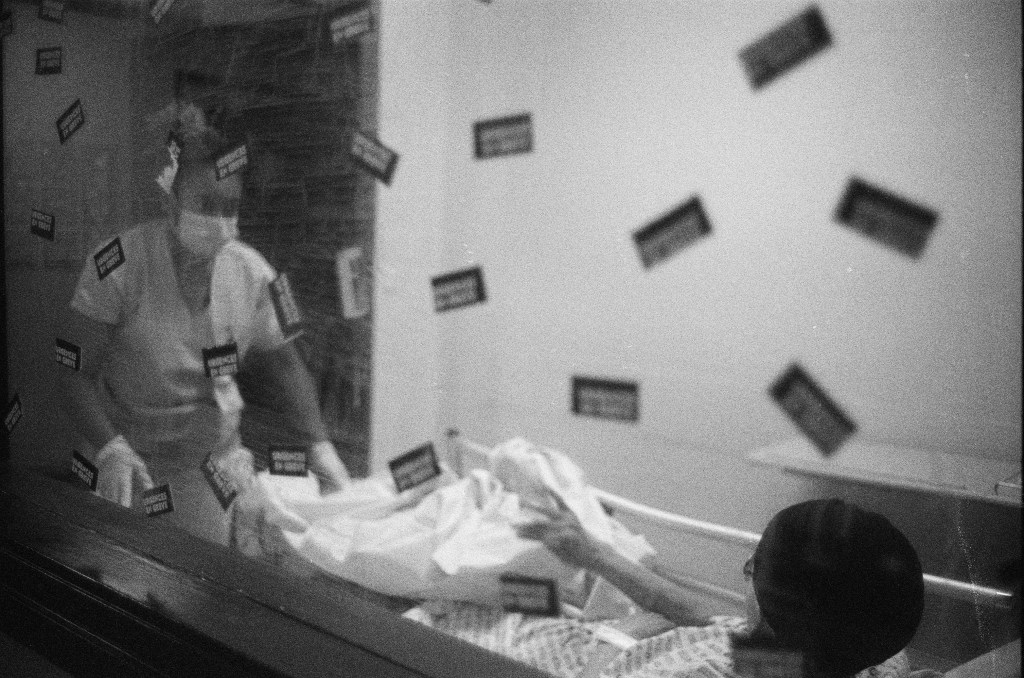
Apart from a few brief moments of stillness, the viewing experience is almost too intense at times, as if the harsh fluorescent lighting and smell of antiseptics transcends the screen. Through the use of a handheld camera, the camera work effectively emphasises the fast-paced nature of the hospital environment. Similarly, various fade transitions and effects such as slow motion and split screens all work as either enhancement or in contrast to the visuals. Additionally, black-and-white stills are scattered throughout the documentary showing moments stuck in time, capturing genuine connections within the hospital.
Time—and lack thereof—is constantly of the biggest concern, something the documentary presents simply by capturing without intervening. Everyone cries for help, albeit different versions of it, all searching for some sort of relief. In an environment that turns people into statistics—and where it’s increasingly acceptable to prescribe and dismiss them—Jamal is a rebel purely by taking his time, offering the human compassion he feels patients deserve.
A part of ACID Cannes 2023, On the Edge also received a Special Mention after its world premiere at CPH:DOX earlier this year, and it’s easy to understand its appeal. As Jamal with his unbridled patience showcases a genuine interest in people, so does the documentary. The people featured are all portrayed with humanity despite being caught within a dehumanising system, and viewers are allowed to see patients and workers as people beyond their diagnoses and labels.
Despite Peduzzi’s protagonist undoubtedly being a substantial part of the documentary’s appeal, the achievement lies in its entirety. While the film will live on through its recollection of Jamal’s dedication and human interactions after the end credits finish, the artistic vision and dynamic musical score make it truly triumphant. An urgent report from the inside, On the Edge is a wakeup call that public institutions need treatment now and not later, when the issues might become incurable.
Director: Nicolas Peduzzi
Producer: Carine Ruszniewski
Release Date: March 17, 2023
Available on: TBA



 Flip Screen
Leave a comment