(This article contains spoilers for the most recent ‘Scream’ films, including ‘Scream VI‘.)
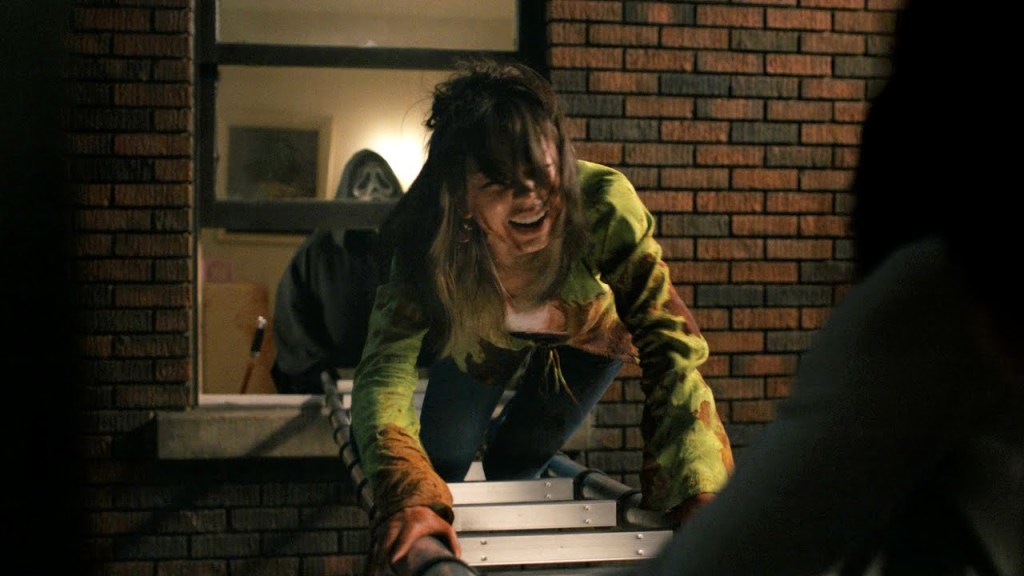
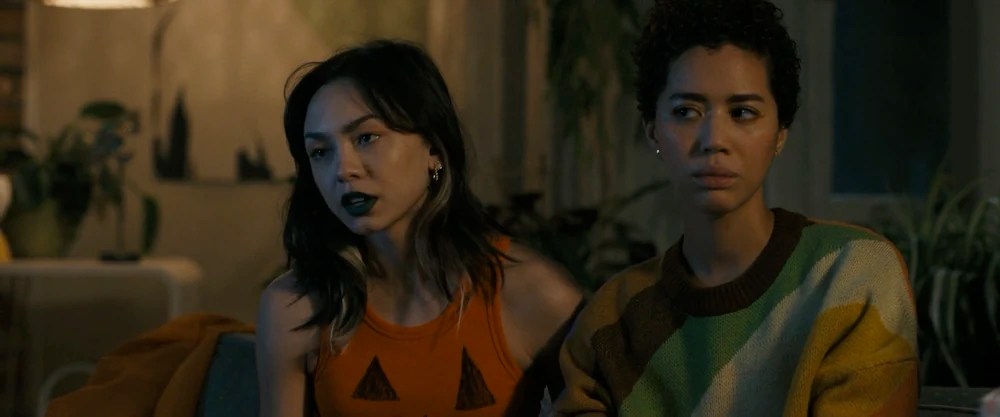
While watching Scream VI at the cinema for the first time on opening weekend, there was one scene in particular that made me feel uneasy. It comes about halfway through the film and involves Anika Kayoko (Devyn Nekoda) trying to escape masked killer Ghostface after being brutally attacked, bleeding out while her girlfriend Mindy Meeks-Martin (Jasmin Savoy Brown) shouts for her to crawl across to safety. As Ghostface shakes the ladder while a terrified Anika tries to join Mindy and her friends on the other side, I was shaken up, tightly squeezing my own girlfriend’s hand as we watched it play out on screen.
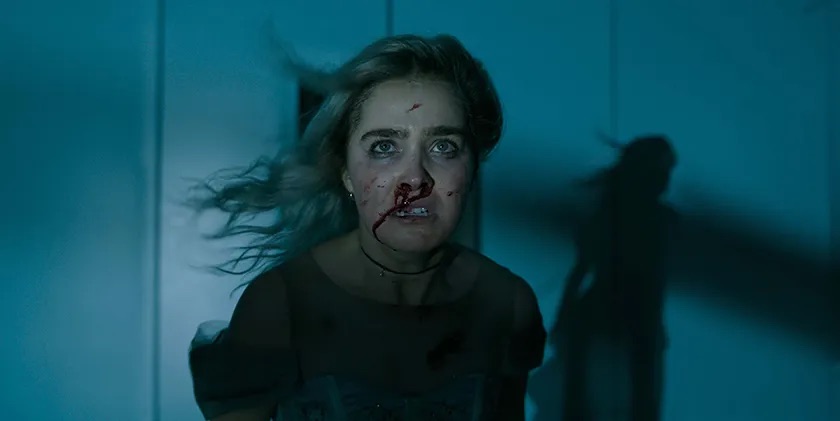
Even now I still find myself wanting to look away, dreading the horrific moment Anika falls to her death while Mindy watches from above. I was hopeful they would both survive, especially with recent genre films like the Fear Street trilogy and Bodies Bodies Bodies that see their sapphic protagonists make it to the end; final girlfriends, if you will. But while these movies may have quietly set the bar high for sapphic representation in horror, this also raises an important question— does the genre have a continued responsibility to protect queer characters, or should their survival be determined on a case-by-case basis as dictated by the narrative?
Back in March 2016, the television series The 100 sparked a major wave of backlash from LGBTQ+ fans after killing off Commander Lexa (Alycia Debnam-Carey), who is shot to death moments after an intimate scene with her lover Clarke Griffin (Eliza Taylor). The showrunner made the intentional decision to create hype around the now-infamous episode, leaving fans of “Clexa” (as the pairing is popularly known) shocked and devastated by the events that transpired. Not only did Lexa’s death bring a painful new awareness to the trope, it also resulted in a heightened sensitivity for many LGBTQ+ viewers when it came to watching media that included queer characters.
More than ever, there was an inherent fear that something tragic would inevitably happen to LGBTQ+ characters as a consequence of their sexuality, that they would be treated as nothing more than expendable cannon fodder. It’s an emotional response that isn’t unwarranted; in many cases, queer characters have been killed off for cheap shock value that serves no real purpose, and many of them are sapphic. While some interpret the trope to mean any media where a queer character dies, I believe there’s a more nuanced discussion to be had surrounding “bury your gays,” especially where genre is involved. When it comes to Scream in particular—a horror franchise known for playing with tropes and expectations— it’s best to approach it with the mentality that all bets are off.
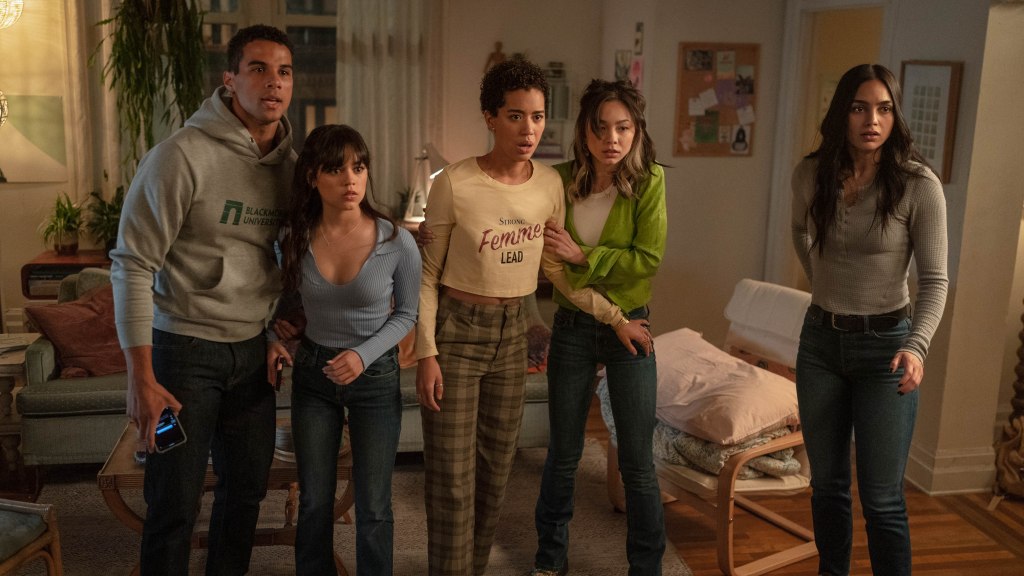
Mindy first arrives on the scene in 2022’s Scream along with her brother Chad (Mason Gooding), joining sisters Tara (Jenna Ortega) and Sam Carpenter (Melissa Barrera) as franchise newbies. With endless quips and an expansive knowledge of genre movies that would make her late uncle Randy proud, Mindy has the honour of being the franchise’s first canon queer character. There are subtle hints towards her queerness present throughout the film; a shirt emblazoned with a rainbow, a heart-shaped Pride pin. Mindy’s sexuality is confirmed during a house party scene when she casually mentions to Chad that she wants to hook up with Frances. The camera then pans to Mindy’s crush, making it clear that Frances is in fact another girl, and the two later share a brief on-screen kiss.
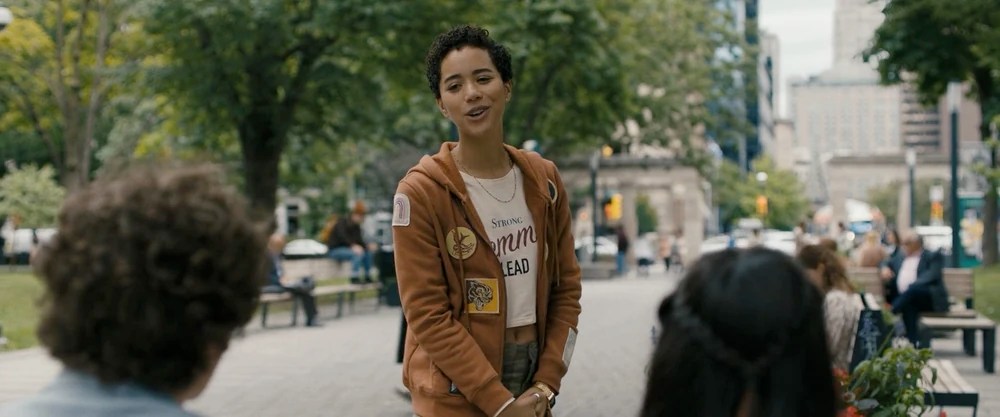
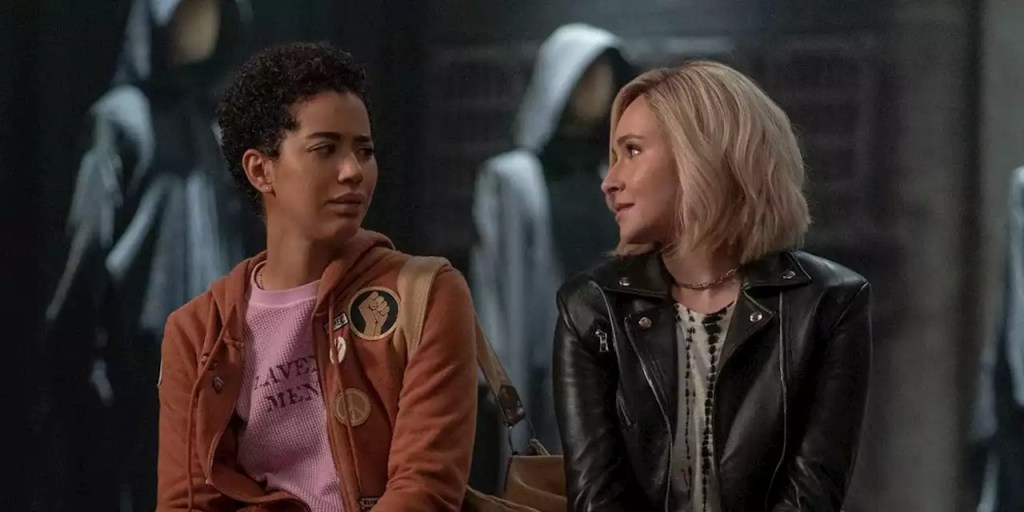
While the franchise could have easily left it at that and then relegated Mindy to the sidelines for the next instalment, Scream VI instead chose to go the opposite route. Not only does Mindy continue to be part of the action, she’s given a girlfriend with the introduction of Anika, and her wardrobe choices are even more reflective of her sapphic identity, making her outwardly more visible as a queer person. Mindy is seen wearing a jacket adorned with various patches, including ones with “she/they” pronouns and the Progress Pride flag, as well as shirts with bold slogans such as ‘lavender menace’— a 1969 phrase later reclaimed by sapphics referring to the perceived threat of lesbianism. At a time when LGBTQ+ people around the world constantly face discrimination and persecution, it’s empowering to see a character who’s so comfortable in her queerness taking up space in a mainstream genre film. However, this also has ramifications when it comes to the censorship of queer media. After Paramount chose not to edit out scenes involving Mindy and Anika’s relationship, several countries in the Middle East, along with Indonesia and Malaysia, banned Scream VI from cinemas.
I’ve previously talked about why I believe The Haunting of Bly Manor doesn’t fall into the “bury your gays” trope, and after giving it some thought, I don’t think Scream VI should necessarily be considered an example of it either. Anika’s death is certainly a tragic one, but the film establishes early on that it’s not afraid to make bold choices and throw pre-established rules out the window, with Mindy even stating in her monologue to the group that this time, no one is safe. There’s also the fact that Anika is written specifically as a love interest— a role that’s frequently considered expendable within the Scream universe. More often than not, love interests in Scream either end up victims of Ghostface or are revealed to be Ghostfaces themselves; it’s a pattern that Mindy herself acknowledges in Scream VI. “Never trust the love interest,” Mindy pointedly says to Anika, just moments after her girlfriend blows her a kiss.
But for the lengths the film goes to in establishing Anika as Mindy’s lover, viewers barely get a chance to become invested in her character or, for that matter, in the relationship between the two. Even though we see them cuddle at a Halloween frat party and share an emotional moment shortly before Anika’s death, they unfortunately aren’t given much focus as a couple. And while it’s nice to see Mindy have a narrative that extends beyond romance, it’s a shame her relationship with Anika doesn’t have the chance to develop past the film’s halfway mark, especially since they’re both queer women of colour.
Still, it’s significant that characters like Mindy and Anika are even present in a mainstream horror film like Scream VI. When the original Scream was released back in 1996, it featured an entirely white and straight main cast; however, the franchise has made much more of an effort in recent years when it comes to diversifying its representation. All the actors who play the “core four”—as Chad dubs the main group of characters in Scream VI—are either Black or Latina, and it’s worth noting that Savoy Brown is queer herself. Even though it’s not a requirement for LGBTQ+ characters to be played by actors who are part of the community, it adds an undeniable element of authenticity when those casting choices do happen. Along with her portrayal of Mindy in Scream, the actress has garnered a great deal of acclaim for playing Taissa Turner in horror drama series Yellowjackets— another sapphic role that’s contributed to her sizable queer fan following.
Of course, it feels remiss to discuss LGBTQ+ representation in Scream without also bringing up the franchise’s queercoding of fan favourite final girl Kirby Reed (Hayden Panettiere). Even though Kirby wasn’t written as queer when she first appeared in 2011’s Scream 4, she’s a character who many LGBTQ+ fans of the franchise have embraced as one of their own. Known for her confident persona, sarcastic humour, love of horror movies, and effortlessly cool style, Kirby comes across as relatable yet untouchable— someone queer viewers can both identify with and idolize. Although Kirby’s queerness lives within the realm of subtext, it’s a valid reading of her characterization that’s widely accepted. Many even believe she has a crush on her best friend Jill (Emma Roberts), who turns out to be one of the killers in Scream 4. Interestingly enough, we almost saw a similar dynamic between two of the franchise’s new characters just over a decade later that would have been canonly queer, before their relationship was later rewritten as platonic.
In the original draft of the script for last year’s Scream, the opening scene sees Tara suggestively flirting with Amber Freeman (Mikey Madison) via text message, the two established to be dating. However, the explicitly sapphic elements of their dynamic were removed in the final version of the film, with Tara and Amber’s relationship becoming that of best friends rather than girlfriends. Had this key element not been changed, it would have seen the franchise put a queer spin on the “love interest as killer” trope for the first time, with Amber revealed to be one of the characters donning the iconic Ghostface mask. Especially after revisiting the film recently, I wish they had chosen to go down that route. The inclusion of a sapphic Ghostface would have been a great way for the Scream franchise to make it clear that all its characters—whether gay or straight—are on a level playing field when it comes to their mortality. And even though Scream VI sets Tara and Chad up as a couple, there’s no reason Tara couldn’t still be queer just because her relationship with Amber was written out.
All of that said, it would be a missed opportunity to not have Mindy comment on the “bury your gays” trope in a future instalment of the franchise. While a seventh Scream movie hasn’t been officially confirmed at this time, Scream VI’s box office success makes it seem likely that another entry is just on the horizon. I have no doubt that as a queer millennial with an affinity for genre films, Mindy would be well aware of the trope’s existence, and Scream has the chance to use her to bring awareness of it to a wider audience. Since she’s a character who offers a meta commentary on various tropes and conventions, having Mindy reflect on her own personal subversion of “bury your gays” as a queer Black woman in a horror franchise would be particularly impactful. Not only does Mindy watch her girlfriend die, she has a brush with death herself, getting stabbed on the subway in a near-fatal Ghostface attack. I also hope the emotional impact Anika’s death has on Mindy doesn’t get glossed over. While she maintains her sense of humour, Mindy becomes noticeably angrier and more closed off in response to her trauma, yet she’s not given the chance to directly address it.
Aside from the scenes Mindy shares with Anika and the main group, one of her most memorable moments in Scream VI is between her and Kirby, and it would be nice to see more interactions between the two in the future. While it’s fun to watch them discuss their mutual love of horror movies, there’s the potential for Mindy and Kirby to have a meaningful scene where they reflect on the shared trauma of losing someone they loved. Maybe it could even be an opportunity to explore Kirby’s queerness as well, which would feel extremely validating for those of us who interpret her character that way. The point is that Scream has the chance to offer a thoughtful commentary on the “bury your gays” trope as it relates to horror, deconstructing it through the uniquely self-aware perspective of a queer character in the genre. And if Mindy continues to survive, maybe even getting to have a new girlfriend who makes it until the end with her, that would make it even sweeter.



 Flip Screen
Leave a comment