
“Exaggerated and predictable, but also thoroughly enjoyable and fun”
Ever wondered what a combination of Groundhog Day and 13 Going on 30 would look like? Look no further than One More Time, a new Netflix original film from Sweden. Still stuck in the small town she grew up in, Amelia (Hedda Stiernstedt) wishes for nothing more on her fortieth birthday than to be eighteen and carefree again, far away from the disappointments of adulthood. Whilst wallowing in self-pity at the local restaurant, drinking and eating a cake directly from the packaging, her former best friend Fiona (Tove Edfelt) walks in, about to pick up a noticeable stack of pizza cartons for her own birthday celebration. Evident by home video inserts from past birthdays, the two used to celebrate together, but now there’s an evident feeling of distance between them one would not usually associate with childhood friends.
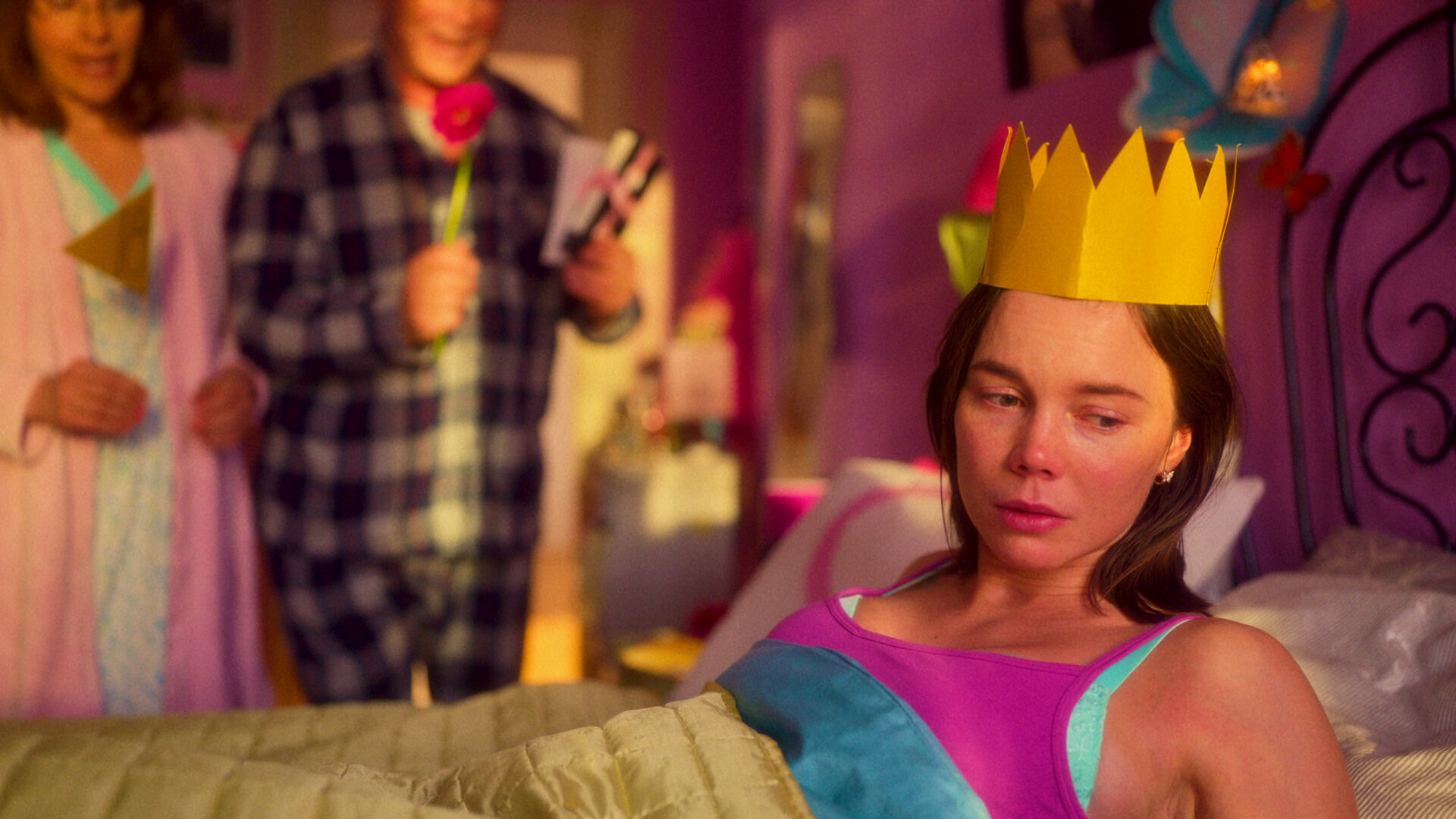
Later that day, Amelia unearths a time capsule of past wishes and photographs she and Fiona once buried before their falling out. As she is about to read Fiona’s wish, the paper blows away, and when she chases after it, a studentflak (a Swedish tradition of celebrating graduation) knocks her unconscious. When she awakens, she does so to the sound of her parents (Per Fritzell and Vanna Rosenberg) singing “happy birthday” for her. Unexplainably, the year is now 2002 and Amelia is back in her pink childhood bedroom the day of her eighteenth birthday. Depending on one’s experiences, the thought of ever being forced to relive parts of adolescence might feel like either a dream or nightmare. Initially, Amelia is ecstatic at the thought of once again experiencing what she considers to be the best time in her life, which includes dressing in the coolest clothes and accessories while walking through the school’s corridors with her popular boyfriend Max (Maxwell Cunningham) and stylish friend Moa (Elinor Silfversparre Fahlén).
While Amelia’s present-day self is in the midst of a midlife crisis, the biggest problem for her 18-year-old self is trying to figure out how to get alcohol for her upcoming party. Soon though, it becomes evident that her memories may have been skewed over time, and reliving the same day over and over again gets old fast. All of her emotional stages feel valid—ranging from confusion, denial, excitement, anger, frustration, sadness and indifference—as the film successfully captures the bizarre reality of the situation. Amelia becomes increasingly more fearless as she gets acclimated to her situation, as the story itself begins to flirt with the notion that there might not even be a way out of the loop. While this would have been interesting to explore further, it’s a little too daring for a feel-good film.

Above all else, Amelia repeatedly tries to reconnect with Fiona (whose younger version is played by Miriam Ingrid), the one person who saw her for who she was. One of the moments Amelia relives—and one of the film’s most satisfying sequences—is a performance by Fiona in the school’s assembly hall. The artistic outcast delivers an acoustic rendition of Teddybears’ “Yours to Keep,” but is repeatedly interrupted by students leaving as she begins to perform. However, as Amelia gradually gains more clarity, the scene moves from her being a quiet bystander following the orders of others to her eventually not just staying to listen but also criticising everyone else for their disrespectful behaviour towards Fiona. The portrayal of the scene and how the dynamics shift within it from the first version to the last is one of the best in the film.
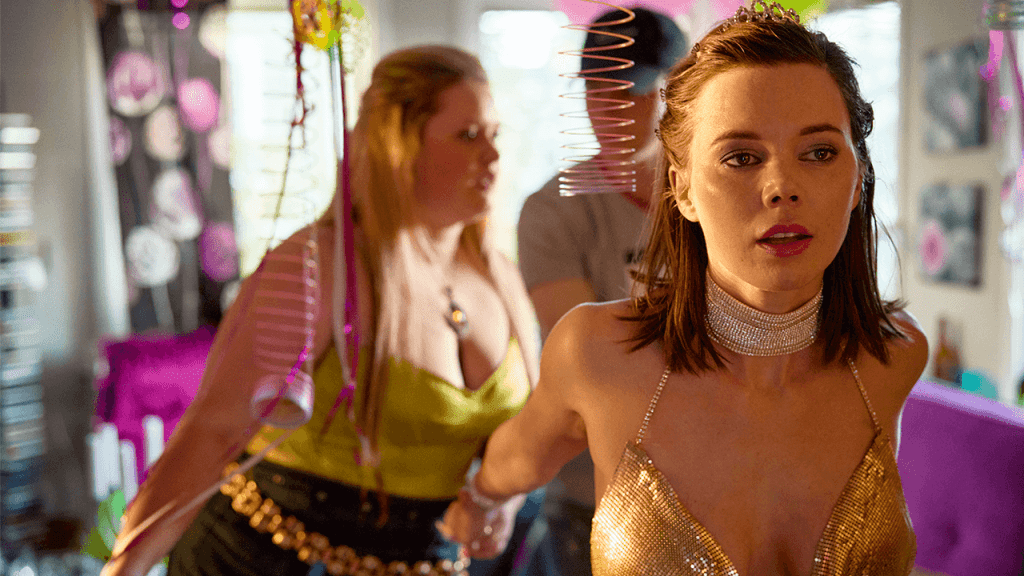
One of the more entertaining aspects of One More Time is how it captures the distinct atmosphere of the early 2000s. A rush of satisfaction hits when hearing songs by artists including Alice Deejay, Avril Lavigne, and P!nk, which many viewers might have their own nostalgic attachments to. In contrast, the original score feels uneven. While it certainly sets the tone for the film, sometimes it relies too heavily on musical cues that end up feeling too whimsical for their own good. Indisputably though, fashion ties it all together. Adding an additional element of visual colour, the Y2K fashion ranges from miniskirts and exposed stomachs with belly piercings to bedazzled low-cut Juicy Couture sweats and visible thongs. It is as if time has stopped when watching Amelia swiftly changing outfits during a montage, showing off some of the most fun yet atrocious outfits known to mankind.
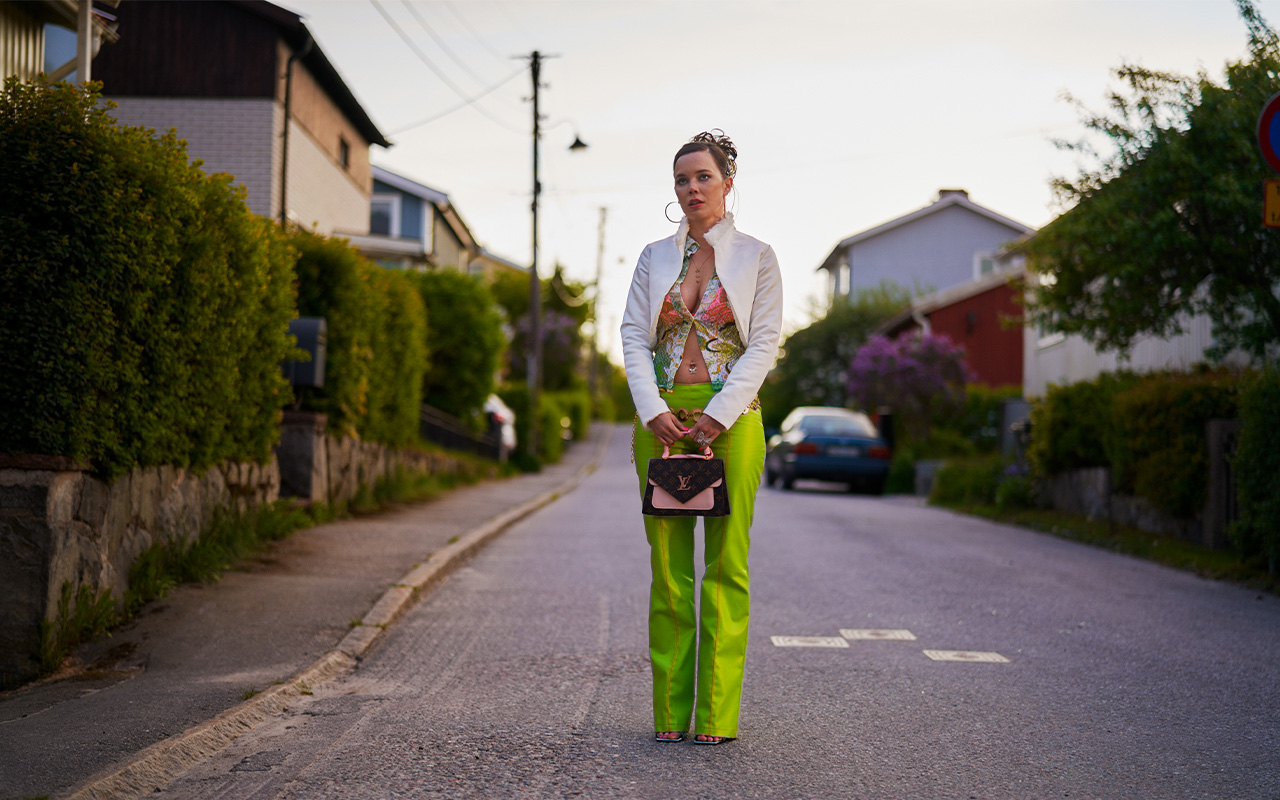
Essentially, One More Time is a classic coming-of-age tale, but for a 40-year-old. While some viewers might say that detail is one of the worst qualities of the film, one can argue that it’s what sets it apart. Amelia is immature and acts thoughtlessly and selfishly throughout the film, but she is simply mirroring how most teenagers often operate. As Amelia barely seems to have left her adolescence behind, it makes sense that those traits are still around. Viewers see the world from the eyes of someone who fully believes that being eighteen was the peak of their existence, and with that comes a character who creates not just humour but also painful mortification. This is evident in how Amelia acts when she is told that every guy had a crush on her or by how she tries to prolong her relationship with her boyfriend. She is desperate for anything to cling to, as she doesn’t know who she is beyond what other people expect and think of her. The beauty of these complexities within Amelia is all thanks to Stiernstedt’s portrayal of her. Despite solid acting throughout, Stiernstedt carries the film as she embodies Amelia’s characteristics with believability and impressive ease.
Sadly, some parts of the film feel rushed and when the conclusion arrives, it happens too late and feels somewhat tame in comparison to the otherwise very playful story. Ultimately, the film would have benefitted from a more cemented closure, as it feels as if something is missing when it ends. Despite its easily accessible and self-aware nature being something many filmmakers are afraid to lean into, viewers will get exactly as expected and sometimes those types of films are precisely what viewers might crave. It’s pretty formulaic, but the film feels cognizant, which makes a huge difference. Groundhog Day is blatantly referenced and, at one point, Amelia even watches the 1993 classic as a means of trying to figure out how to break the loop.

As men have long dominated midlife crisis films, there is something particularly refreshing about seeing more portrayals of aimless women, especially when these women get to be clueless in very public ways without presenting façades for other people’s convenience. Moreover, it is thrilling to see a character that does not try to dispose of her entire personality by the end of the story. What at first seems to be a second chance to try to right all the wrongs she made the first time around eventually changes into a much better life lesson—one should learn from past mistakes, not try to cover them up. Changing the past will not undo all misdeeds, as one has to make an effort to actively try to be better throughout life.
While some of the 2000s details will prominently amuse viewers who have a first-hand experience of living or growing up in 2002’s Sweden—including the song from an advertisement for a brand of pain relievers—One More Time is a fun time capsule enjoyable for all viewers in its own right. It’s exaggerated and predictable, but also thoroughly enjoyable and fun. With a big heart at its core, the film delivers the equally comforting and distressing message that there isn’t an age restriction on feeling aimless and lost in life.
Director: Jonatan Etzler
Producer: Eleonor Sager
Cast: Hedda Stiernstedt, Miriam Ingrid, Elinor Silfversparre Fahlén, Vanna Rosenberg, Per Fritzell, Maxwell Cunningham, Tove Edfeldt, David Tainton, Lo Kauppi, Tindra Källström, Amanda Rosdahl, Nora Toverud
Release Date: April 21, 2023
Available on: Netflix



 Flip Screen
Leave a comment