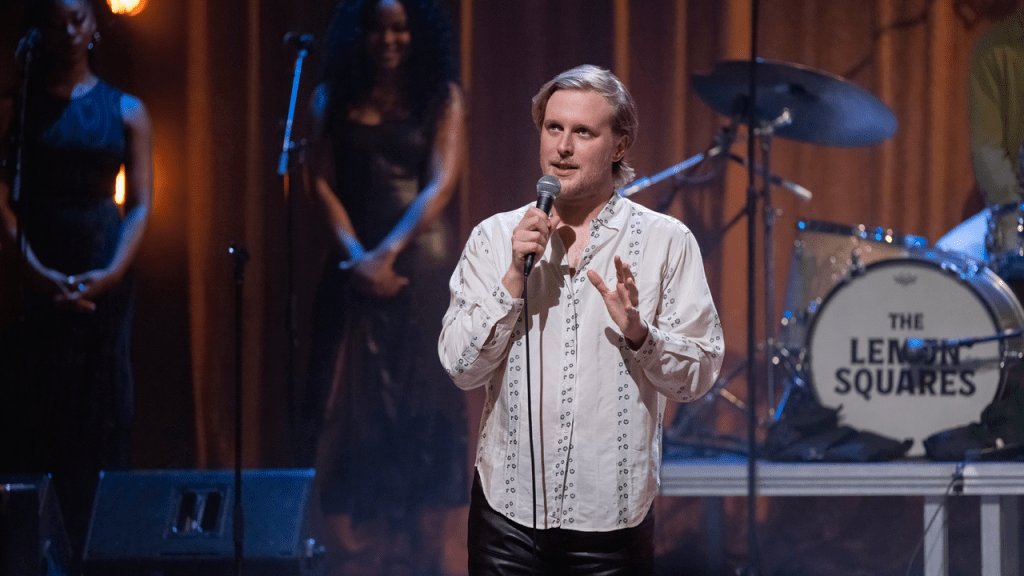
Opening with a title card that reads “This film should be played loud bitch,” actor and comedian John Early immediately lets viewers know that he is having fun with the chosen format of his first HBO comedy special. A direct reference to a similar command in The Last Waltz, Early continues to reference the highly acclaimed concert documentary throughout the special, including in its title sequence and a taped sign on the greenroom that says “John Early & The Band”. Although shot in the style of a sweaty and grandiose 1970s rockumentary, with Early as the lead singer of his band The Lemon Squares, Now More Than Ever is much more than a mockumentary a la This is Spinal Tap than viewers might initially think.
Stand-up can be a highly personal medium, as many comedians perform under their real names, predominantly talking about things that allegedly happened to them, and Now More Than Ever is no less intimate. That said, instead of presenting himself so straightforwardly, Early has crafted something more complex that demands patience but rewards the viewer with a refreshing comedic flow and rhythm. A versatile performer with just as much range as the songs he covers, Early upends the traditional structure of a comedy show as he moves between stand-up, backstage footage and musical numbers to explore the anxieties and desires of being alive. Early—who announced ahead of the special’s premiere at the Tribeca Film Festival that he would be halting all further press in support of the WGA strike—consistently experiments with the format, and presents ideas about what a performance might even entail in the process of doing so.
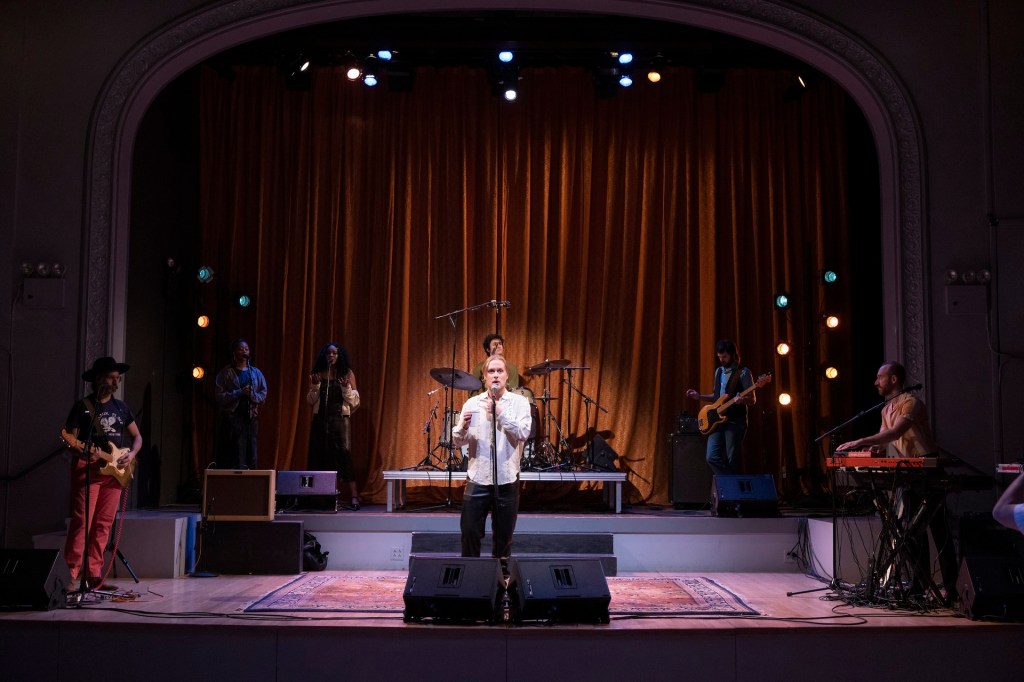
Known for his Britney Spears impressions, Early announces halfway through the show that he is taking requests from the singer’s catalogue, only to spend the following minutes steering the audience into suggesting the song he wants to sing—“Overprotected”. What initially seems like a moment of spontaneity is actually only a spectacle of performance. Nonetheless, it is a great collaboration between singer and band, which consists of musicians Yazan Fahmawi, Drew Hart, Michael A. Hesslein, and Will Lawrence, as well as backing vocalists Princess Fortier and Dominique Toney. It is worth noting that Early’s version of Britney’s trademark vocal fry lessens in use during the performance. Instead, he allows his natural voice to peek through more, which underlines that there is no punchline and that the performance is not a joke. Instead, Early is sincere and serious—a sentiment that echoes through all his musical performances. Moreover, this feeling also acts in contrast to the special’s backstage footage.
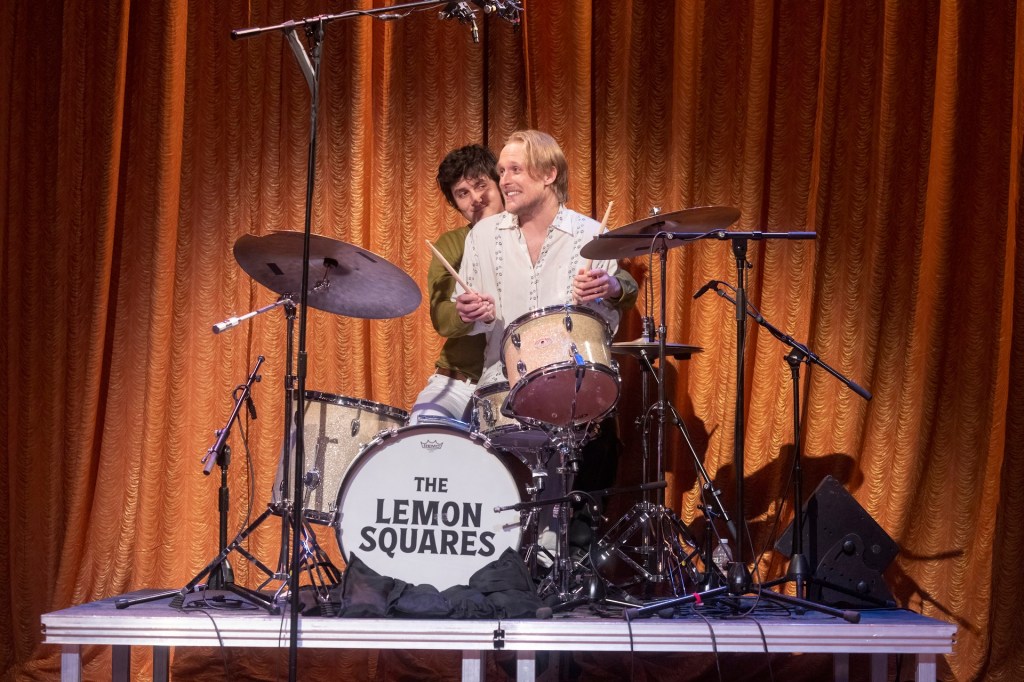
The special opens with a scene where viewers see Early alone in his dressing room as he hurriedly transfers store-bought lemon squares from a plastic container onto a plate. When done, he covers them with saran wrap, disposes of the evidence and enters the greenroom, triumphantly announcing to his band members, “I made my famous lemon squares!”. Basking in compliments and praise, Early has cleverly revealed the essence of what is to come from the start. This kind of backstage sketch footage is scattered throughout, providing both an overarching narrative and intricate revelations about Early. The pre-show rehearsals, interviews, prayer circles and escalating disputes between Early and his band show Early as a self-absorbed and misbehaving creative leader becoming increasingly more disrespectful, needy and manipulative. He desperately needs his band members, yet would love to have the stage all to himself. Usually, behind-the-scenes footage is all about candid moments organically captured, but in Now More Than Ever, it seems as if the backstage version of Early is more fabricated than the one on stage. He is fully aware of the camera’s gaze and does everything to be perceived a certain way, often using questionable methods.
Shot in the style of a serious concert documentary, Now More Than Ever blends several types of comedy into one dazzling unified hour. Through the direction of Emily Allan and Leah Hennessey, the show moves beyond being a conventional special in every sense of meaning. Moreover, cinematographer Jarred Alterman, editor Stephen Gurewitz and lighting designer Evan Anderson all contribute to making the arrangement feel as candid and precise as it does. Fully heightening the viewing experience, the multiple moving cameras scan and zoom in their search for action, making the atmospheric and intricate images feel less stale and more alive and vibrant. It creates and conveys a certain mood, and seeing Early interact with his band on stage—goofing around, sharing glances, adjusting and reacting to each other—is thrilling. Furthermore, as the live audience sits in darkness, the viewers at home have no crowd to identify with, and will thus instead form a deeper connection with the performers.
Beautifully accompanied by his keyboardist, Early enters the final act with a reflection on the shallowness of millennials, dissecting cultural and social phenomena as he explores how the generation behaves—and misbehaves—online and offline. As he talks about whatever irks him, he moves from nonsense phrases and hyperbole expressions to ennui and loss of meaningful connections. The whole segment features ridiculous bits, yet feels emotional in its delivery. After Early has poignantly expressed his concerns, a cover of Neil Young’s “After the Gold Rush” follows. Early—who likely found inspiration in Dolly Parton, Emmylou Harris and Linda Ronstadt’s cover of the song—firmly holds the microphone with both hands as he delivers his tender rendition. It is silly to use that song in this context, but also genial to force viewers to sit with such a vast contradiction between silly and sincere without breathing space. He wistfully talks about the emptiness of an entire generation—which includes himself—and follows it up with a desperate and oddly moving plea to take life seriously before it is too late.
How ideas are packaged and presented is just as important as the ideas themselves, and Now More Than Ever is simultaneously dumb and thoroughly clever. As Early masterfully delivers cutting observations about modern culture, he also demonstrates self-awareness as he moves towards embodying the self-obsessed people he is talking about. Instead of punching down—which is considerably easier—Early comes across as genuine since he does not pretend to be detached from the spaces or above the behaviour he criticises. He jokes about millennials whilst being one himself; he is serious in his criticism yet repeatedly engages in what he is complaining about. Still, even though he mimics what he criticises, this never comes across as treacherous. Instead, it is all a compelling portrait of someone caught in performance and the complexities of being alive.
Even though the idea of combining comedy with music is far from new, Early makes a point of telling the documentary crew that no one had ever thought of it before they did. Slumped back into a sofa, he exemplifies anyone who has ever been convinced—or determined to convince others—that they were pioneers. He talks about how people used to storm out of their performances, but he does so with a smug expression of satisfaction—something that becomes even funnier as the band members sitting next to him say nothing. It is a moment of inauthenticity which extends into the stand-up routine. On stage Early mocks the hollowness of the phrase “be yourself,” a piece of advice that is never about encouraging actual individuality but rather a shallow motivational uniformity, which he embodies perfectly through bubbly and perky body language. He also talks about the performative nature of trying to be a perfect boyfriend the day one’s partner has therapy, only because they might otherwise spend the entire session talking badly about you. It is such undesirable behaviour, yet there is something deeply human about the self-absorbed nature of how people might act when they worry about how others perceive them.
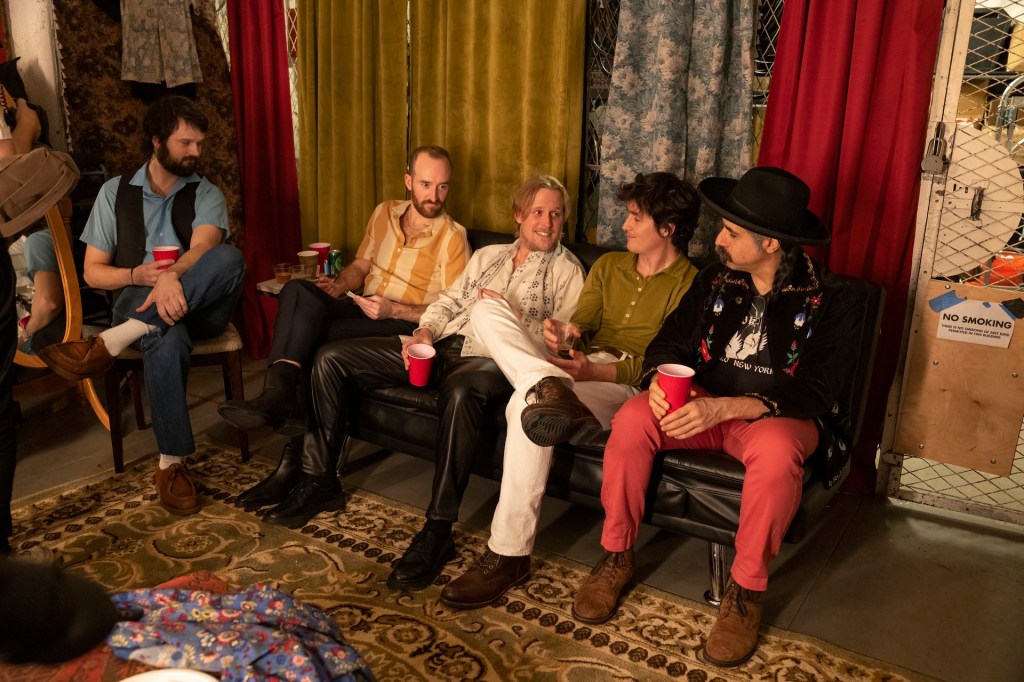
This exploration of falseness and performance continues into the musical numbers. Early performing covers instead of original songs feels like an additional element to the bit, “hiding” his true self behind the words of others. Even so, these songs work beautifully with the messages Early wants to convey. His opening song, Tweet and Missy Elliott’s “Oops (Oh My),” is an empowering song about self-acceptance and self-love, “Overprotected” conveys a desire for its protagonist to figure life out on their own terms, and “After the Gold Rush” was released in 1970 during a time where people yearned for individualism and authenticity. These songs subtly reflect what Early explores throughout his special. But, just as the countercultural movement of the ‘60s and early ‘70s ended and most people had to adapt to societal norms, it is difficult to be fully and truly free as a person during the daily performances of life. These song choices are hilarious, but also meaningful and substantial. Most importantly, Early is thoroughly genuine when performing them.
Early’s comedy has always been interested in deciphering the ways people perform purely by existing, and here he yet again succeeds in finding both comedy and truthfulness in the conflict of who people are versus who they want others to think they are. People lie to themselves and to each other, all because they are so terrified of what might happen if they were to be authentic instead of allowing others the power to determine their self-worth. While people can contain multitudes and inhabit various contrasting traits all at once, society usually does not encourage them to truly be themselves. Instead, they are often told—explicitly or subtly—to change or hide parts of their true selves in a way to present differently, depending on the company or situation. These messages are about as encouraging as Early’s “be yourself” bit, as this surely is an easy way to lose one’s core self.
Ultimately, Early accurately captures and depicts this need of wanting to feel seen and acknowledged, and his contrasting performances embody the complexities and fears that make up the human experience. Due to the use of these various personas on and off stage, usually a tool for the performer to create distance between themselves and their performances, viewers might wonder when—and if—they ever see the real Early. Sincerity looks no one single way and Now More Than Ever is undoubtedly very personal, a creation that allows attentive viewers a glimpse behind characters and façades. Early’s performance is generous and vulnerable—he is inhabiting characters but differently than before, and beneath the silliness is thoughtfulness. The most earnest Early of all emerges beneath his passionate plea to cherish life while one is still alive, as well as during the musical performances, where it becomes evident that he hopes that his audience will enjoy what he does as much as he enjoys doing it—him triumphantly hitting the highest falsetto harmony on Donna Summer’s “I Feel Love” is delightful evidence of this.
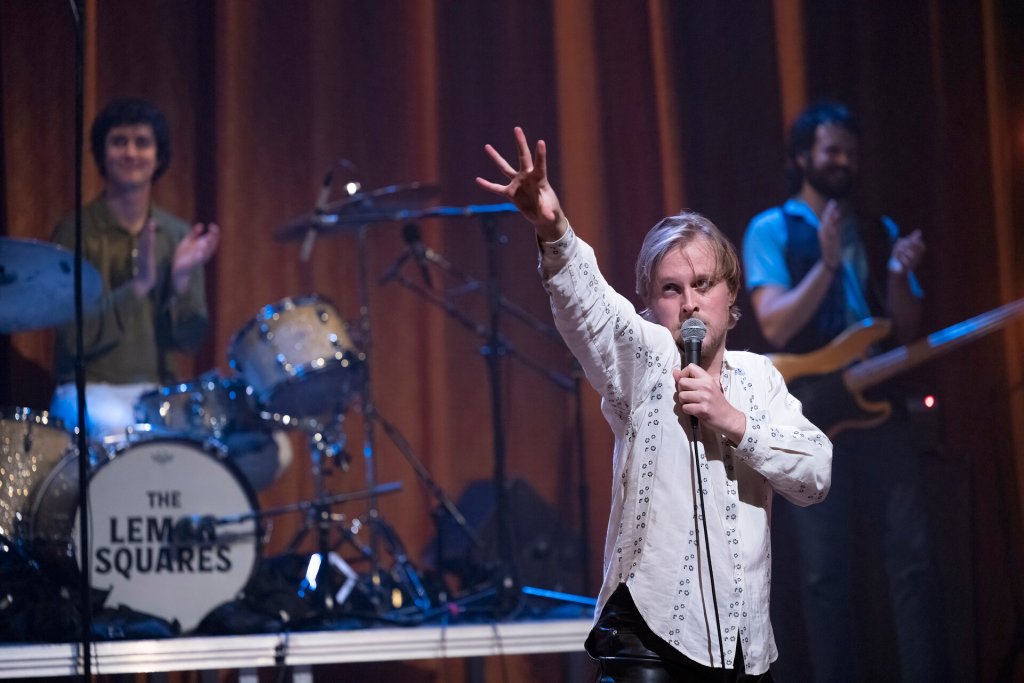
Early’s body has long been a tool for his comedy, and this special showcases the sheer preciseness of his physicality as a performer. Through gestures and mannerisms—pouting with his bottom lip, tucking his hair behind his ears, maniacal laughing, stomping on the floor, changes in his pronunciation and line deliveries—he conveys a range of attitudes, including childlike innocence and teenage angst. From a lesser comedian, the use of intonation and physicality would feel like cheap tricks used to get laughs. However, nothing is accidental with Early. Whether playing out various meet-cutes or acting out a young version of himself trying to gain the approval of his straight classmates, Early perfectly encapsulates it all with a hypnotic physicality—including a scene of him fainting, a recurrent theme throughout his work. Moreover, he is also really funny. From covering the vulnerability of bowling and the choreography of Shark Tank to the deceptive intimacy of his Grindr grid and the language used in phone-location-services prompts, it is all so precisely articulated and silly.
It is a pure joy watching someone do what they were born for and, while Early has always been a scene stealer, in Now More Than Ever he finally gets to showcase the entire repertoire of his cabaret-vaudevillian-type performing self. Moving from sincerity to inauthenticity and back to sincerity again, Early gives a magnetic performance within the performance, where viewers can peel off layer after layer to discover nuances and complexities behind the masquerade. The ease with which Early moves from telling jokes to singing and back to telling jokes again would make anyone jealous, and the masterfully crafted and sharply written special contains as many multitudes as Early’s personas themselves. It’s lavish yet grounded, silly yet sincere. Above all else though, Now More Than Ever is an infectious and indulgent special that leaves viewers rooting for an encore.


 Flip Screen
Leave a comment