
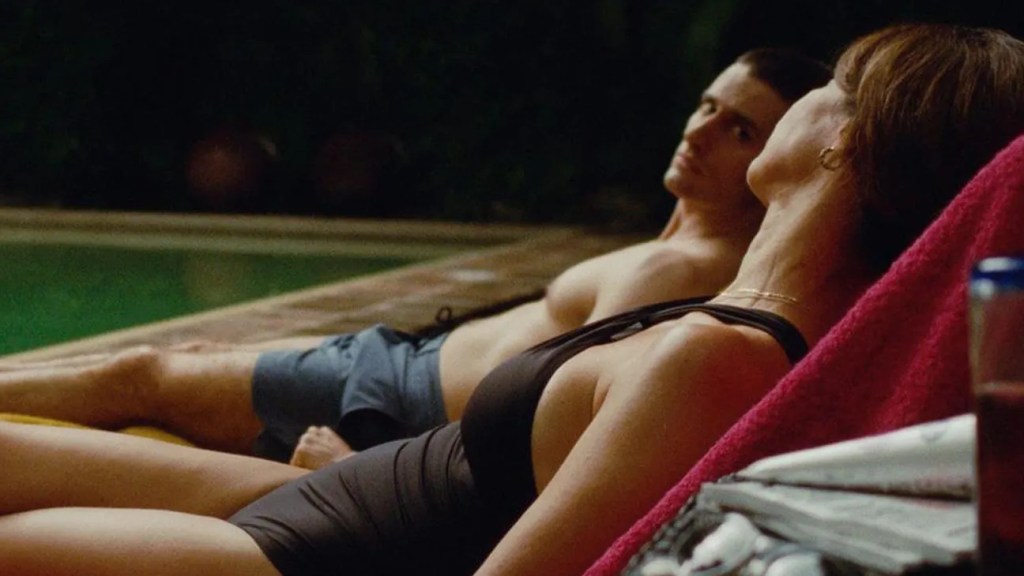
“A thrilling albeit at times somewhat frustrating viewing experience”
In an act of desperation, impulsive black sheep Alejandro (Dario Yazbek) flees his family home in Mexico and finds himself in New York City, living on borrowed time. One day, he meets Jack (co-writer Jack Irv), a pet store employee with similar parental baggage. From that first encounter, they become intertwined in ways that will change their respective trajectories for good, as Alejandro introduces Jack to the vices of the city, moving through drug-fueled sexual escapades, numerous dangerous affairs and illegal deals, and just generally bad decisions.
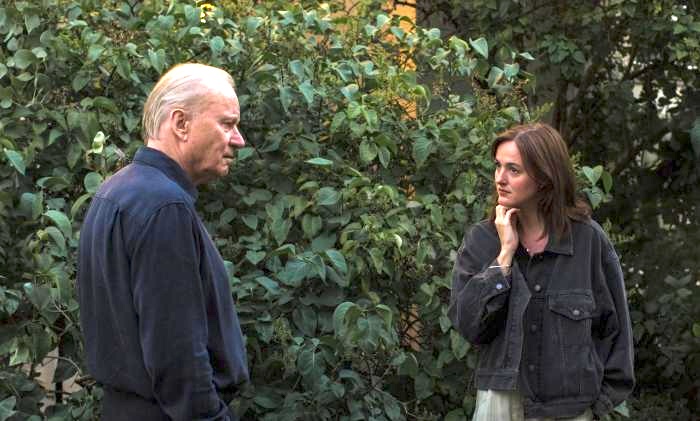
Both spoiled by their wealthy parents, these young men are offered every opportunity in life to live successfully, yet this seems to hinder rather than motivate them. The men in their lives—both with great influence over their offspring—often talk about family values and respect, yet they seem mostly self-centred. Is it so surprising then that their sons lash out and act the way they do? After all, they both come from families with turbulent dynamics and have seen little else in terms of positive role models—Alejandro comes from a family that loves “putting on a show,” as his mother (Maribel Verdú) describes it and Jack’s family consists of his pampering and eavesdropping mother (played by Emmanuelle Seigner) and philandering father (played by Willem Dafoe).
Initially, it isn’t difficult to comprehend why Alejandro comes across as so appealing to Jack. After all, he is everything Jack isn’t. He moves through the world confidently and doesn’t even care to close his robe when hotel staff arrives at his room to serve him food—which simultaneously also underlines how he cares little about anyone else’s comfort than his own. Alejandro is impulsive and brusque, but Jack thinks of him as courageous—he is someone who lives life freely and fully in comparison to his own sheltered self. Due to Alejandro being such an easily irritable, impatient, and brash character, Yazbek gets to deliver some of the funniest lines of dialogue, which are only made funnier through his spot-on delivery. The chemistry between him and Irv is equally entertaining, as it feels both exciting and believable to witness how their relationship unravels and deepens. Amid the allure and depravity of the Big Apple, the young men find an escape in each other as they’re both searching for something neither can precisely identify. Even though their messy codependent entanglement will inevitably end in destruction, the journey getting there is too seductive to not relish in for as long as it lasts.
While the opening might lure viewers into thinking that Alejandro is the main character—which is further underlined by him being the one frequently setting things in motion—it’s interesting to see how Jack slowly becomes an integral part of the story, albeit differently than his partner in crime. In comparison to Alejandro, who is cemented as a loose cannon right from the start, Jack offers more of a character study as he evolves during the film’s duration. Although frustrated in his own ways, there’s also something endearing about him, evidenced by his breaking down when he discovers that his father has been sleeping with his sister’s tutor (played by Camille Rowe). Intoxicated by Alejandro’s charisma and confidence—as well as attracted to the alternative lifestyle he offers—the aimless yet simultaneously restless Jack sees an opportunity to escape his own dissatisfactory life in search of something more in life. Like Jack, viewers are seduced by Alejandro’s magnetism, and even though he’s a manipulative narcissist, he is also occasionally spellbinding enough to explain why Jack continues to fraternise with him.
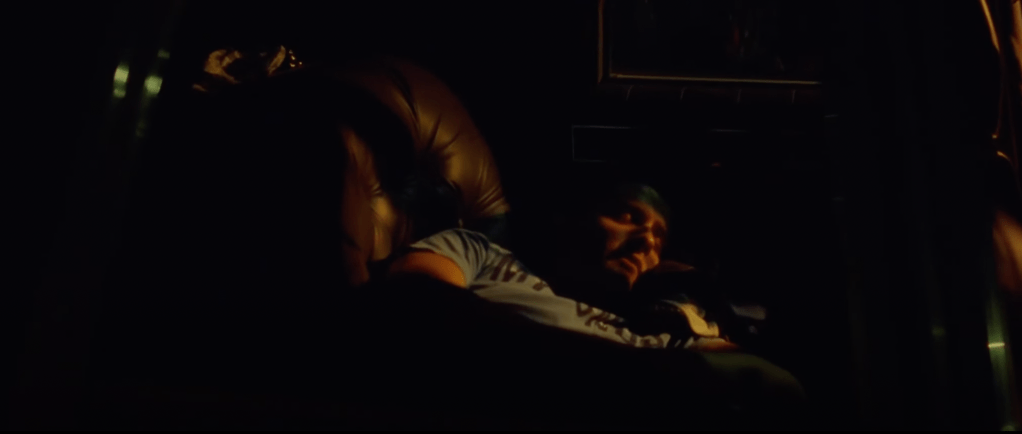
As for their plan to create a fresh start for themselves, Alejandro suggests that they should break into the homes of the rich and elderly. The first robbery so funnily encapsulates the differences between the protagonists and how Jack, even though he obeys Alejandro, still can’t fully commit to not feeling compassion for others. As they rob an old woman, Alejandro screams and points a gun against the woman’s head, only making the already stressful situation feel even worse. Jack, however, is trying to be nicer and reassures her that they aren’t going to harm her whilst he is patting her back. The dissimilarities of the characters are also evident in the visual aspect of their contrasting styles, as precisely captured by costume designers Bruno Dicorcia and Holly McClintock. Unsurprisingly, Alejandro’s appearance is the most memorable, including one especially insane yet fitting outfit consisting of rusty red suede loafers, wide white Billabong boardshorts and a black T-shirt that says “Champagne”. Additionally, little details like how he keeps his flip phone in the waistband of his pants add so much personality to the character for viewers to detect.
Throughout the film, the visuals look the part of the gritty and sleazy 70s and 80s films it draws inspiration from and the imagery is only further heightened by Eli Keszler’s music, which is especially powerful in the film’s climax featuring pure chaos and unease. While bold, one of the film’s most refreshing elements is its portrayal of sexuality as less about strict definitions and more about fluidity and whatever feels good for everyone involved. This idea is something of a quiet revelation to Jack, who seems to have struggled with figuring out his sexuality, and the continuous refusal to adhere to binaries only further opens his world up. Furthermore, the sheer fact that Schnabel—the son of Oscar-nominated filmmaker and acclaimed painter Julian Schnabel—centres his debut on a story featuring two young men struggling with the influence of their fathers is in itself interesting.
Capturing the consistent sense of imminent danger, cinematographer Hunter Zimny’s vibrant photography beautifully moves between tenderness and violence. The camera work alternates to accompany the state of mind of what is unravelling, which helps paint the alluring landscape in which Alejandro seduces Jack in more ways than one as they give into temptation. The close-ups used in both passionate encounters and heated arguments highlight the moment’s intimateness; the bumpy camera movements echo the volatile energy expressed by the characters and the situations they find themselves in. During one of their sexual adventures, the lighting becomes a key player, and despite the scene’s explicit nature, the dance between how the light source hits the four moving bodies as they engage and momentarily part is skilfully captured. Yet, the most sensual images prove to be the less explicit ones. During one scene, Alejandro and Jack’s black silhouettes are all that are seen as they move back and forth from a state of almost kissing with the city’s gorgeous skyline out of focus behind them, which becomes more or less visible depending on how the two young men move their bodies and faces.
Director and co-writer Schnabel’s debut feature echoes the reckless energy embodied by Alejandro, which to a certain degree is part of its inconsistency in quality. Like him, the film is at times a little too intoxicated by its impulses, a little too self-indulgent for its own good—sometimes even the boldest expressions end up feeling stale when keeping the same rhythm and not changing the formula. For instance, certain aspects of Alejandro’s reckless and volatile behaviours are left unexplained by Schnabel, Irv, and Galen Core’s screenplay. Is it necessary to have every plot point and detail openly clarified and solved? Definitely not. Having said that, at times it seems as if Alejandro is doing certain things simply for the sake of doing them—which is interesting at times, tiring and confusing at others. However, just as one might feel led to believe that the narrative is growing stagnant, the film takes a turn to entice viewers yet again, proving to be a thrilling albeit at times somewhat frustrating viewing experience.
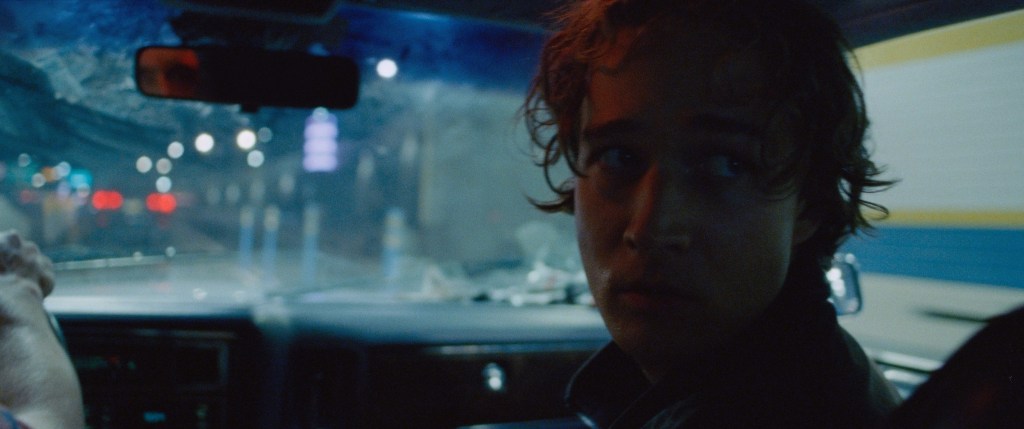
With its 110-minute runtime, it could’ve been a little tighter which, with this type of story, would only further positively emphasise its chaotic feel. Still, evoking some aspects of the Safdie brothers—more Good Time than Uncut Gems—the fast-paced narrative and accompanying energetic score creates an atmospheric world for viewers to fully immerse themselves within. Presenting the New York City streets with a grittiness echoing Abel Ferrara and Martin Scorsese’s early work—the latter of whom is one of the film’s executive producers—Pet Shop Days makes the city look as beautiful and grimy as ever. Moving through greenery and graffiti-clad buildings, it captures the contrasts of not just the city but the story itself, ultimately making the city feel like a supplementary character.
Regardless if viewers will love or hate the film, it’s a film impossible to watch and not feel strongly about. Pet Shop Days wasn’t made to cater to mainstream audiences and even though it’s slightly uneven, this core sentiment positively transcends the screen. Still, the script’s most compelling aspect remains the strong refusal to try and make any of the characters likeable in the conventional sense. The creators’ approach to these characters, and the world they inhabit, is refreshingly unprejudiced and without judgement. This makes the film feel mesmerising, as it forces viewers to confront not just Alejandro’s arrogance and cruelty, but Jack’s self-pity—characteristics as human as any that borders on being off-putting but more often than not ends up successfully balancing the fine line between too much and just enough. Undoubtedly as contentious as its leads, Pet Shop Days offers above all else a notably distinct artistic direction and point of view for a debut—which indicates great promise for Schnabel’s future cinematic endeavours.
Directors: Olmo Schnabel
Screenplay: Olmo Schnabel, Galen Core, Jack Irv
Producers: MeMo Films (Francesco Melzi d’Eril), Twin Productions (Galen Core, Olmo Schnabel)
Cast: Jack Irv, Dario Yazbek, Willem Dafoe, Emmanuelle Seigner, Camille Rowe, Peter Sarsgaard, Louis Cancelmi, Maribel Verdú
Editor: Sophie Corra
Release Date: September 3, 2023 (World Premiere)



 Flip Screen
Leave a comment