
“A solid debut that successfully and poignantly captures the beauty and horror of youth”
Ukrainian director Anna Buryachkova is making her feature debut with Forever-Forever (original title: Nazavzhdy-Nazavzhdy), an unsettling portrait of the young in Kyiv in the late 1990s. Despite its setting, the film feels urgently contemporary as its themes will echo as relatable today as they would have done back then. It is a story about the usual challenges of adolescence but also the struggles of navigating a newly independent country and trying to find a place in the world without losing oneself.
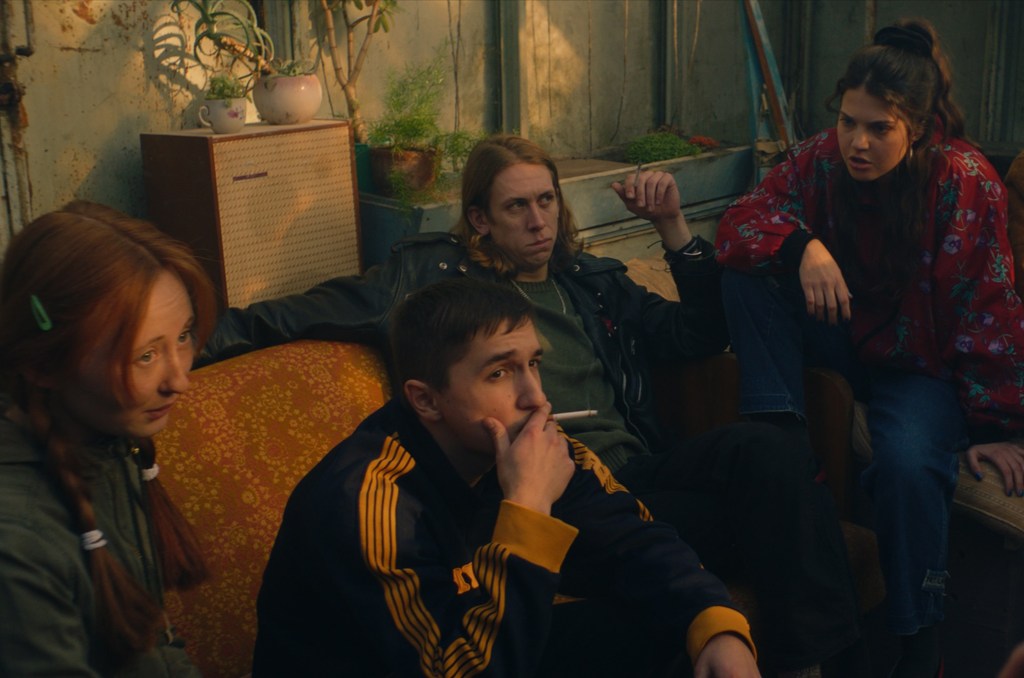
After transferring from a downtown high school, Tonia (Alina Cheban) is hoping for a fresh start in life. Initially, things are peaceful at her new school as she re-joins swimming practice and quickly finds a new friend in Lera (Yelyzaveta Tsilyk). The two will shortly become inseparable and it does not take long until Lera introduces Tonia to her close-knit group of friends. However, things get complicated as Tonia soon finds herself tangled up in a love triangle consisting of Zhurik (Zachary Shadrin) and Lera’s brother, Sania (Arthur Aliiev). As the friends carelessly roam around the post-socialist streets of Kyiv and engage in all sorts of trouble, Tonia’s painful past comes back to haunt her and challenge her newfound relationships.
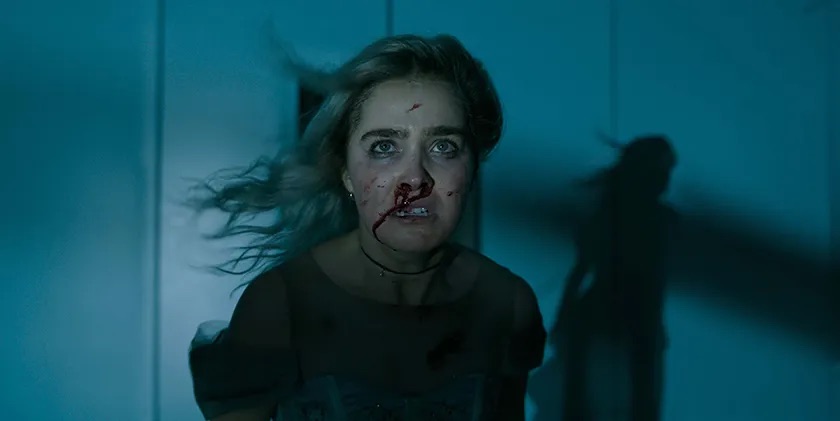
At first, neither the audience nor Tonia’s newfound friends know why Tonia changed schools. Still, the idea that there is something—someone—lurking in the shadows that makes her anxious is an impending growing feeling. This threat turns out to be Tonia’s abusive ex-boyfriend, Pasha (Yevhenii Bykov). When he one day brutally attacks her, the horror revealed through the casual reaction of Tonia’s sister (Asia Pshenychna) when she sees the state Tonia is in after the attack—a simple “oh no, again”—tells viewers everything they need to know about Tonia’s past without using gratuitous violent imagery. With Tonia’s secret revealed, her two love interests rise to the occasion of not solely positioning Pasha as a target but also taking on a protective role to defend Tonia. However, the creation of a villain automatically implies that of a hero, but in this story, neither is as heroic or good-hearted as they might initially seem.
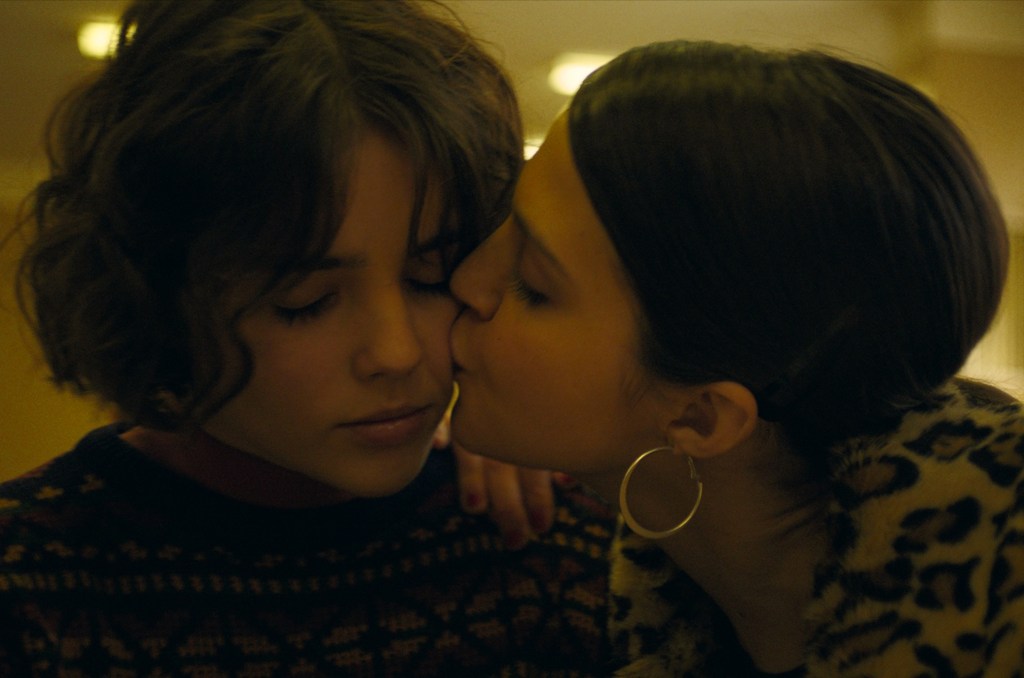
While the spark between Tonia and Zhurik happens immediately after their first meeting, the attraction between Tonia and Sania takes a little longer to develop. There’s also a difference between her two love interests, as Zhurik comes across as goofier and gentler while Sania is much quieter and coarse—this is further emphasised through the film’s sex scenes. As the love triangle evolves, it’s initially alluring. There is freedom in how Tonia entertains both of her crushes as a way to try and figure out what she wants in life. However, after the introduction of Pasha, new behaviours appear much more clearly. These men, albeit very different, both insist that Tonia is safe from Pasha in their company due to their actions and protection. They are territorial, one more so than the other, and it isn’t desirable behaviour but rather exchanging one abusive behaviour for another.
Originally, it appears as if viewers are supposed to feel good about the group of friends. After all, they welcomed newcomer Tonia into their group after her first day at school—a relief most viewers can understand and relate to. With time, the distinction between good and bad will begin to blur and viewers will have to confront the reality of a majority of the introduced characters engaging in more or less horrific and questionable behaviour. Still, this only further emphasises the theme within the narrative of people compromising to get what they want (or, at least, think they want). Whether it is the idea of compromising one’s moral compass to feel included and part of a group or staying with someone you might not even love only to avoid loneliness, it is all understandable on its most basic level. Regardless of the reason, people can compromise and endure much in life only for this safety as the daunting alternative proves to be frighteningly unknown. Tonia’s group of friends provides belonging and protection, but at what cost?
The search for somewhere to belong is a theme found within the film’s narrative but the comfort of companionship quickly moves from innocently giggling out of excitement when listening to new music to less wholesome acts. After learning that classmate Ira (Daria Zhykharska) has snitched to the principal, telling him that Tonia and Zhurik were responsible for their biology teacher’s collapse during class, the group decides that Ira deserves punishment. The revenge in question is nothing short of evil yet the unravelling of it authentically captures the viciousness of pushing things too far to secure one’s own position in the hierarchy. With the promise that her crush, Zhurik, wants to meet, Lera lures Ira into the school after hours. After forcing her to undress, Lera collects the clothing and smiles big before running away. When the rest of the friend group enters the room, it is as if the air is sucked out of the room, as it becomes evident just how exposed Ira is as well as how terrible the friends are. When the group eventually runs away, Tonia stays behind. Possibly struggling to fully grasp the situation—as if she was not aware of the extent of the punishment—she decides to take her jumper off and cover Ira’s body before joining her friends. When Tonia later sees Ira wearing the jumper at school, she asks for it back only to throw it in the trash—implying that while she felt bad about what happened, she doesn’t want to risk being associated with Ira.
One of the film’s biggest successes is how it makes the environment feel impressively lived in, as do the characters. Even though viewers only spend 107 minutes with these characters, their fundamental characteristics slip through the cracks in subtle and less subtle ways making viewers feel as if they know them fully. Particularly interesting is to see how the various relationship dynamics unravel, as it feels as if eavesdropping from afar—from a safe point—but still being nearby. Whether tackling the dynamics of friends, lovers, perpetrators, or siblings, they are all handled sufficiently without feeling either juvenile or irresponsible in their portrayal.
Despite these triumphs, it feels as if the plot loses its way momentarily somewhere in the middle as it struggles to find a balance between the burgeoning love interests and how the narrative moves from exciting attraction to cruelty when the focus is primarily put on one of the boys. The film’s slightly uneven execution only grows stronger due to the fact that certain scenes feel so organic and gut-wrenching. Thus, putting them next to each other will only make the difference feel even greater. Additionally, while the introduction of Pasha is the catalyst of events to move along, his actual presence is much less interesting than the behaviours and consequences his existence cultivates when he is not nearby.

In terms of the film’s visual storytelling, cinematographer Lena Chekhovska cleverly encapsulates the inner turmoil brewing within characters by capturing the details, including the exchange of longing glances and the innocent act of hands and arms brushing against each other. When doing this, she often isolates the involved body parts and plays with framing, all to underline their importance further. Appearing a handful of times is also the inclusion of a home video element, which is presented from the point of view of another student and friend filming the group. While a bold creative decision, it is surprisingly seamlessly integrated within the material and thus only adds to the period. Less experimental but no less stunning, the shot of Tonia sitting on the edge of the highest trampoline at the swimming pool—with her red bathing suit in stark contrast to the light blue and green tiles on the wall behind her—conveys so much with so little. Moreover, another beautiful shot is the one of Tonia looking at her reflection in the mirror, asking herself if she is a monster. When water suddenly begins to pour down the mirror, it does not just drown out the image of Tonia but possibly also blurs the contours and lines regarding her question.
With a great soundtrack and vivid imagery, Forever-Forever is quite the grim depiction of teenagers trying to find their place in the world. While the development of the love triangle is exciting, ultimately, the film is less about thrilling affection than about the general evolution of relationships—about the power people can have over each other and how easy it is to act badly without necessarily being a bad person. During adolescence, one might think that the things that happen will last forever, including every love, relationship, drama, and mistake. Forever-Forever accurately captures how intense this period is—how strongly one feels and how crucial everything appears to be—while also conveying how ever-lasting each part of it might seem. A solid debut that successfully and poignantly captures the beauty and horror of youth, Forever-Forever proves to be as intense as the adolescent experience itself and will likely engage audiences with its honest and unsettling portrait of the young.
Director: Anna Buryachkova
Screenplay: Marina Stepanska, Anna Buryachkova
Producers: Digital Religion – DGTL RLGN (Natalia Libet, Vitalii Sheremetiev, Oleksii Zgonik, Lyuba Knorozok), Rinkel Film (Rinskje Raap, Reinier Selen)
Cast: Alina Cheban, Zachary Shadrin, Arthur Aliiev, Yelyzaveta Tsilyk, Daria Zhykharska, Asia Pshenychna, Klim Reva, Yevhenii Bykov, Vladyslav Mykhalchuk, Valeriia Berezovska, Arsenii Markov, Nataliia Korpan, Oleh Drach, Yuriy Vutyanov, Nina Savelieva, Olena Lazovich, and Daria Malakhova
Editor: Yurii Reznichenko
Release Date: 8 September, 2023 (World Premiere)



 Flip Screen
Leave a comment