
Do you see yourself more in the reflection of the TV screen than you do in your own reflection in the mirror? Have you ever, even fleetingly, floated the idea that if you could just jump into the world of your favourite show or movie or novel, then that would be the real you? Then enter Jane Schoenbrun, masterfully building on the gauntlet they threw down on 2021’s We’re All Going to the World’s Fair, with the film for you – and one that rejects the easy anti-nostalgia cynicism that could come from such a premise.
I Saw the TV Glow has been electrifying film fans ever since it premiered at Sundance in January, and many beautiful words have been written about it. I wanted to add to them, not because I feel like anything is unsaid or could be said better, but purely because it’s been two weeks since I saw it and I cannot get it out of my head. (Nor, for that matter, the divine soundtrack that features the likes of Phoebe Bridgers, Caroline Polachek and Florist.) Because this is a film that, despite having the lightest of touches, is an absolutely overwhelming cinematic experience that takes all your expectations of a story like this and sets them on fire.

Image courtesy of A24
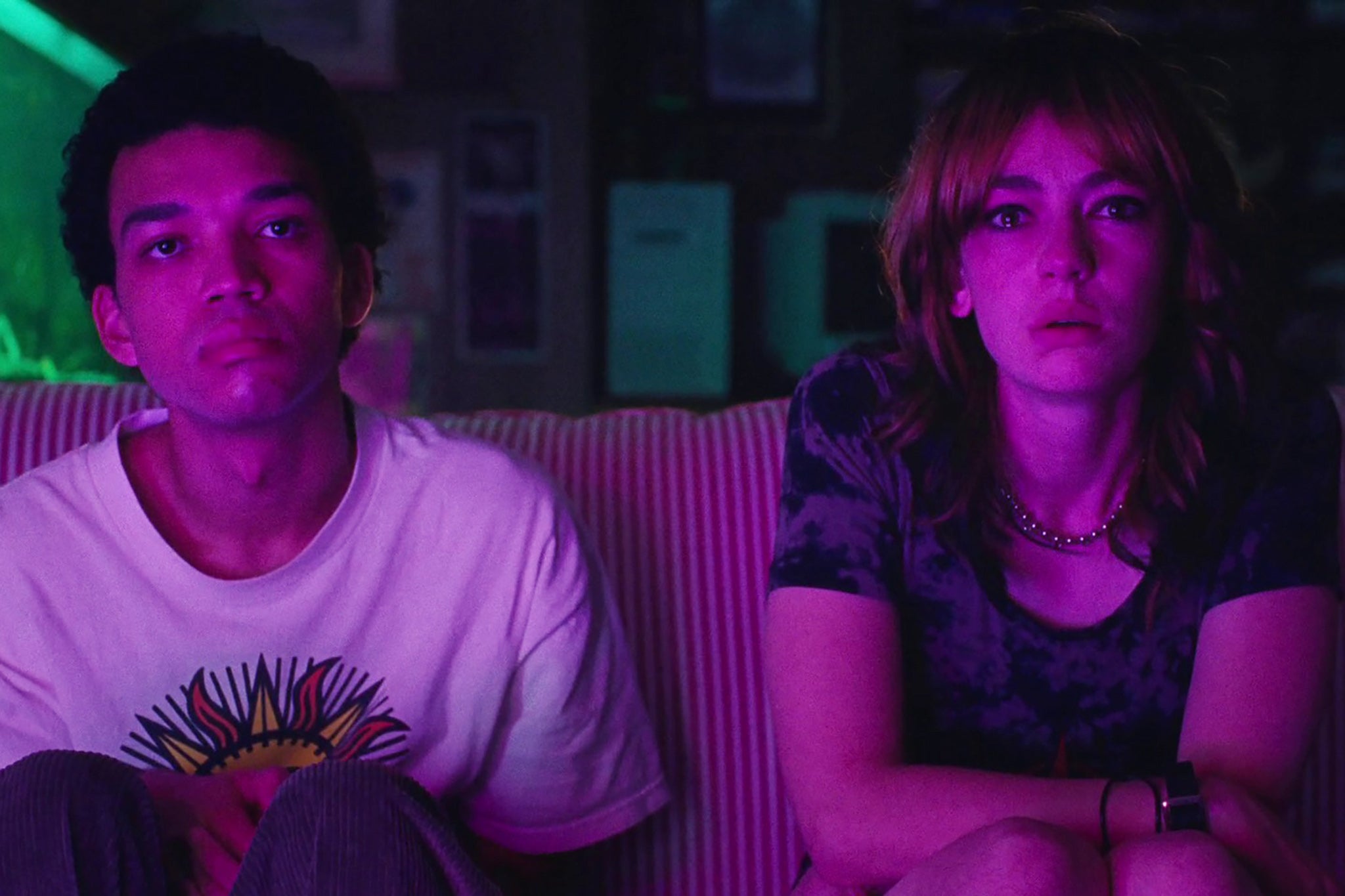
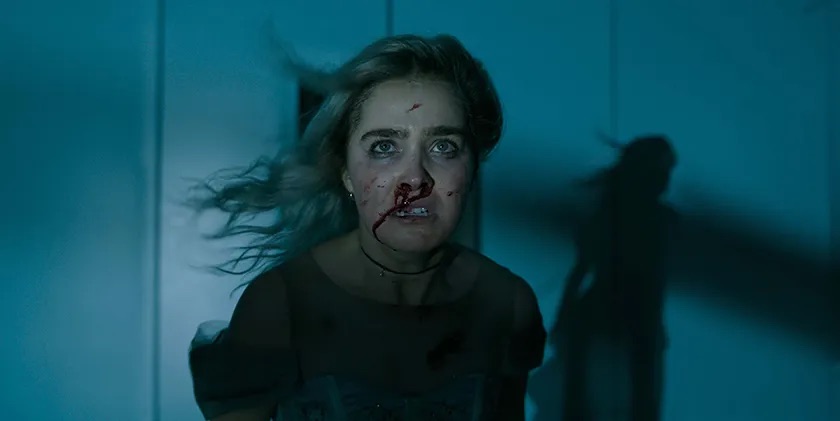
It’s 1996. 12-year old Owen (Ian Foreman) is a lonely kid in a lonely room in a lonely school. Across from him is 14-year old Maddy (an incredible Brigette Lundy-Paine) reading a fan guide for the YA TV show The Pink Opaque. She explains the premise of her favourite serial, the lead characters Isabel and Tara’s psychic connection that they use to fight the monsters of the evil Mr. Melancholy each week. Their encounter is brief, awkward, and monumental. Her favourite show becomes his.
As the months go by, Maddy and Owen (now Justice Smith, transcendent) form a concise but profound friendship based around Maddy leaving tapes for Owen around the school, the flickers of Isabel and Tara becoming a lifeline for the pair as their home lives fracture around them. Schoenbrun takes great care to depict how TV and movies are obviously not real life – but in a way, they’re more real than life could ever be. And they’ll only matter if they actually reflect something true. The way it reflects on Owen and Maddy turns out to define them.
But around the midpoint, Maddy disappears and The Pink Opaque is cancelled, and in the blink of an eye Owen loses his two lifelines. His mother is sick and his father is almost a ghostly presence. We continue to follow him through the years and its clear he’s missing something essential. It’s not exactly just Maddy or The Pink Opaque, but what they seemed to represent for him; the possibility of anything else. Until Maddy returns, forever changed, with answers that implicate the show and the two of them to be more intertwined than they could possibly believe.
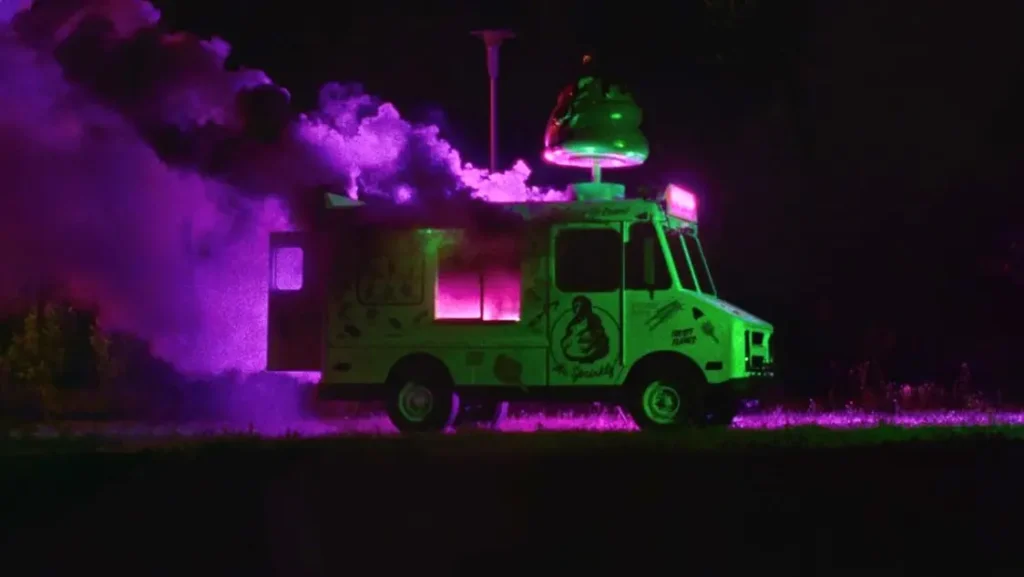
Image courtesy of A24
Schoenbrun’s writing and directing is quietly astonishing without drawing attention to itself, but almost the entire film is on Smith’s back, and what he achieves in a role that could’ve been a non-entity under a lesser performer is nothing short of staggering. Owen is introverted, a wallflower, but Smith excels in the flickers of emotion and yearning that threaten to burst out, only to be stifled by fear and self-loathing. His relationship to the audience is skilfully pitched; a character that tells you everything you need to know because of everything they hide from you. Frustrating and deeply lovable all at once, Owen retains your affection and attention throughout. And once his scene partner returns to the fray, Lundy-Paine is a force of nature, delivering a divinely-written monologue in a planetarium with such earth-shaking power that it sucks the air straight out of your lungs and right back into your heart.
In the charming pastiche of The Pink Opaque that we see in segments throughout the film, Schoenbrun lovingly takes cues from seminal 90s teen shows like the monster-of-the-week thrills of Buffy the Vampire Slayer, or the cozy comfortable vibes of much of the early Twin Peaks. Despite this, I Saw the TV Glow is pure Twin Peaks: The Return, and runs with David Lynch and Mark Frost’s interrogation of nostalgia and time better than any of its imitators so far. With TV Glow, the past and the nostalgia of it is not something set in stone; it’s being dredged up and reinterrogated constantly, incessantly, weighing like a nightmare on Maddy and Owen until they can be brave enough to look it square in the eye.
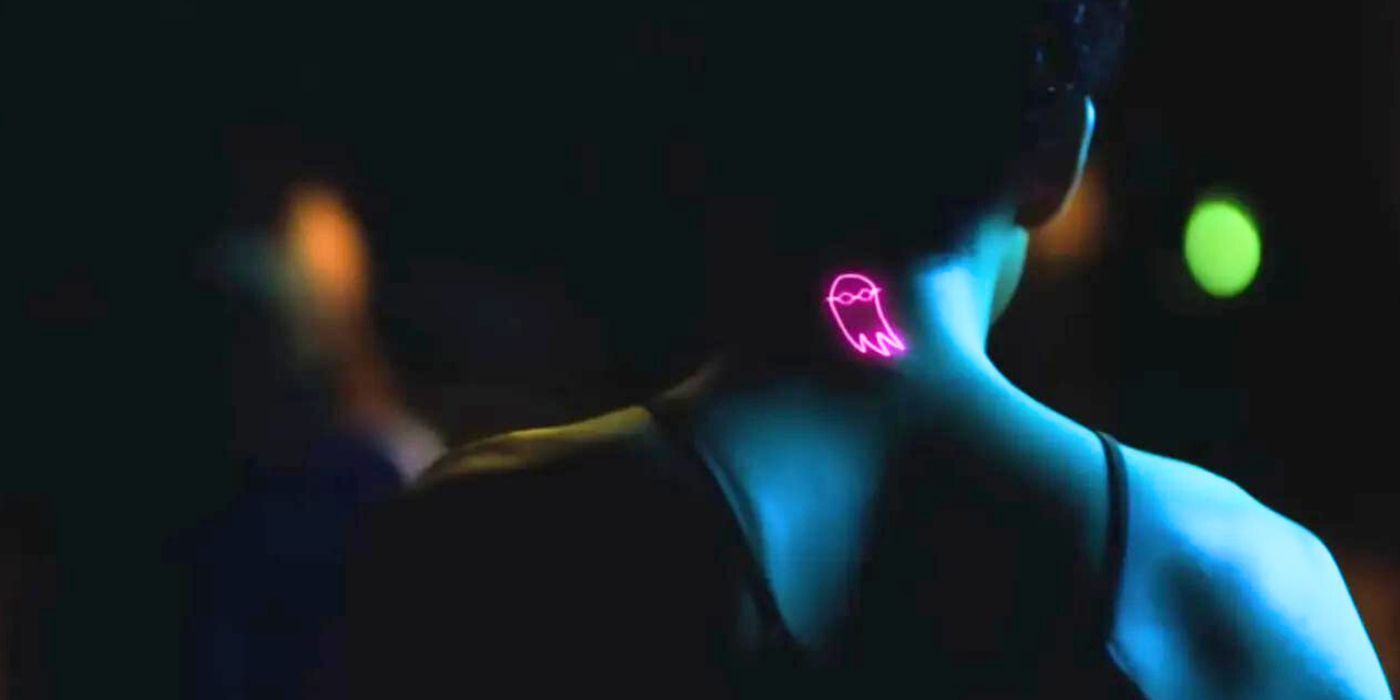
Image courtesy of A24
A lot has been made of the film as a transgender allegory; and one where Schoenbrun dispenses of every easy cliché in the book. Many mainstream trans stories – however good-intentioned – usually suffer by focusing on the more cis-oriented views on transitioning or body dysphoria. It’s usually a plot twist (The Crying Game) or zeroes in on the community around the person, such as Boys Don’t Cry or The Danish Girl. These stories are rarely, truly from the perspective of the one transitioning, and place the dramatic urgency of the narrative around the exterior of the act (instead of the screaming interiority that Schoenbrun captures so perfectly). The previous films, whilst depressingly true to many trans experiences, somewhat accidentally reinforce the idea of coming out or transitioning as inherently dangerous, inviting yourself to be at the mercy of a community whose rejection or acceptance will define you.
Schoenbrun does the complete opposite. The stunning emotional heft of I Saw the TV Glow is in the agony of not changing, refusing the voices in your head that know you’re not who you project. It’s where the film lays down their crucial point – with all the clear-eyed empathy in the world. Refusing to know yourself will not only kill you, but will leave you so hollowed out by the end that there might not even be a heartbeat left to snuff out. Repression is the stuff of nightmares more than anything on any TV screen, and it’s reflected in the haunting wrinkles on Owen’s face as he becomes less and less of himself throughout the film. The passivity, the lack of action, the refusal to look inside and dive in, is the true horror here.
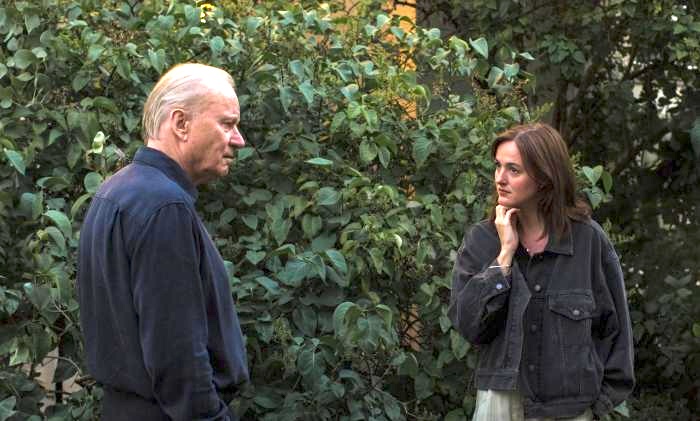
Towards the end, Owen rewatches The Pink Opaque as an adult on streaming, and finds it cheesy, overlit, and not at all scary or meaningful. Something to sneer at, to put away forever. Is this a commentary on nostalgia, going back and realising that the culture and ideas and wonder of your youth is something dated, and needs outgrowing or outright burying? Or is it a desperate attempt to justify to yourself your own adult legitimacy, that you can look down so dismissively on something that used to (and still could) define you? The ending of I Saw the TV Glow is a gut-punch, but it still contains hope. Because there is always still time, as scrawled on a pavement Owen walks past as the film winds down, possibly a message from another, better world. Schoenbrun ends their film on an ellipsis, but crucially never gives up on their protagonist; the person Owen could be is still there, shining and beautiful and waiting. The lack of catharsis doesn’t devastate as much as it galvanises.
It’s the story of a lifetime. And perhaps the film of a lifetime, too.



 Flip Screen
Leave a comment