
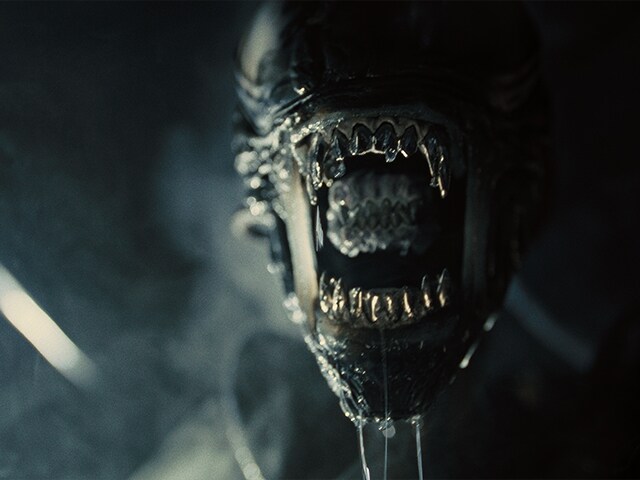
The opening sequence of Alien: Romulus tells you everything you need to know about the next two hours. After the 20th Century logo that reliably curdles into a green eeriness, we’re back in space, panning down gracefully into a spaceship gliding past us. Wordless and beautifully shot, it feels majestic and weighty – the ship could be going anywhere, seeing anything. The wreckage of an exploded vessel is in view, brilliantly rendered. So far, so great… until we see in the fuselage the name of the ship: USS Nostromo. The same ship from the original, seminal 1979 Alien.
A crane shoots out and grabs something from the wreckage (any guesses as to what?), and we spend five minutes watching unknown foot soldiers and scientists carefully transport it to some sort of synthetic facility, where it is carefully logged, and then explored, almost reverentially. It’s still atmospheric, ominous, engaging – but the possibilities have shrunk already. This is Fede Álvarez’s new movie in a nutshell; great and grating.
The Uruguayan filmmaker seems a fitting choice to bring Alien into the new decade. The helmer of certified sicko fun such as his gloriously nasty Evil Dead remake of 2013, Don’t Breathe, and the criminally-underrated miniseries Calls, Álvarez has the credentials for something special. But with his duties as director and co-writer for this, he echoes many of his film’s characters; loving something far too much to let it go, and the fact that Alien: Romulus, despite having everything going for it, is only, merely, good – seems more damning that many of its more soulless contemporaries.
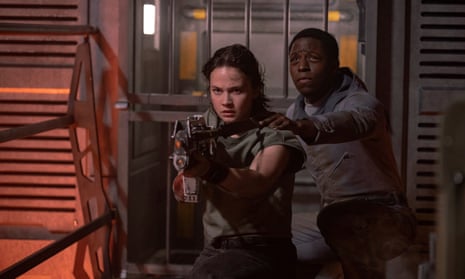
Let’s get the good out of the way first, because the good is so good. Set 20 years or so after Ripley’s original rendezvous with the Xenomorph, we centre on a group of downtrodden and (by this franchise’s standards) young protagonists, led by orphan Rain (Cailee Spaeney) and her android brother Andy (David Jonsson). Stuck on a miserable colony with no natural light, and labouring away in indentured servitude to the good people at Weyland-Yutani, their only hope for a better future is a madcap plan cooked up by Rain’s ex Tyler (a solid Archie Renaux) and their friends to hijack a derelict spaceship floating above the planet and use its resources to shoot off into the sunset. Given the circumstances, it’s a pretty good plan. I mean, what’s the worst that can happen?
Spaeney does typically great work anchoring her first blockbuster film — hot off her major performances in Priscilla and Civil War, the inexperienced youthfulness and doe-eyed dance between pessimism and hope she brings to Rain makes her more than another tired Ripley clone (a refreshingly new take in a film mostly lacking in them). And, following a hallowed tradition of the androids giving the best performance in an Alien movie, Jonsson’s Andy is a revelation. He’s not the omnipotent forces of nature (or unnature) that characterised Ian Holm’s Ash or Michael Fassbender’s David – at least, not initially. Jonsson brings all the nervous energy and unalloyed sweetness of his starmaking role in Rye Lane to immensely endearing effect – which makes it all the more wrenching when a midpoint twist throws his entire identity and purpose into question. His bond with Rain, and the lengths they’ll go to save each other, is the heart of the film, an emotional throughline for the carnage of Romulus that feels real if still slightly undercooked at times. Everyone else fits neatly and professionally into their role as cannon fodder, but there’s still enough quirks and beats that make their inevitable demises meaningful.
As Álvarez pointed out in a great interview done by my friend Rory Doherty for Flicks, this is “the first time we have a group of people that are really willing to go into an adventure.” And it’s this hook, this drive not just for survival but for life, that sets Romulus up to be a unique and timely addition to the franchise. And it is – up until a garish and totally-pointless AI recreation of a long-gone actor sounds the starting gun for the film to devolve into so much less than the sum of its parts, and barely anything more than a greatest hits of the franchise.

It just becomes more of the same. The ship is barren. Some weird shit gets loose. A chestburster. Humans picked off one-by-one. An android (or two, but I’m not getting into that here, I just don’t want to talk about it) with a precarious allegiance to our heroes. Yes, this boiled down is the plot of most of these things, but most of these things – actually, all of them! – have more on their mind than just being an Alien movie. Whatever your opinion is of any of the sequels, there’s a certain respect to be had in the glee that each subsequent filmmaker has had in tossing out the rulebook for what these movies should be. Alien is a haunted house slasher movie in space. Aliens builds on it with a top-tier action movie polish. Alien³ crashes down to earth with a similar framework as the original but a different bent, focusing on the weight of loss and the possibility of redemption. And then Resurrection is just a burst of gonzo energy. The bitter irony is that the more you like Alien, the less you will get out of Alien: Romulus, because almost everything fresh and new is in the first 30 minutes.
This is why Romulus is so unbelievably disappointing, and depressing. Because for the most part, it’s extremely fun!It’s a grand showcase for Álvarez’s distinctive cinematic eye, and the novel and entertaining new ways he crafts scenes in this world of encountering the Aliens – and the facehuggers, too which stick around a lot longer than usual – to great, creepy effect. One of the highlights of the entire movie is a brilliantly-constructed sequence where Rain, Andy and Tyler have to silently and calmly manoeuvre through a room chock full of the fucking things, where a slight sweat or goosebump could mean death for all three. And the “birth” of the fully-fledged Xenomorph is delightfully hideous, steeped in the perverted sexual energy coursing thrrough the franchise.
Álvarez excels in these setpieces, and his compositions of the Xenomorphs rank as some of the most beautiful and horrifying in the whole series. But just when you think the movie is hitting its stride and really becoming its own beast, we’re splashed once again with the cold water of easy, empty nostalgia, all the more annoying for how unnecessary it is. By “legacy sequel” standards, this is far, far better than most, but it’s in Romulus’s many strengths that the self-sabotaging weaknesses stand out more. Your Creeds and Top Gun: Mavericks got away with this by making its tropes feel earned and fresh. This feels tired.

I’m still waiting for creatives and executives to realise that the “it’s all connected!” aspects of modern franchise filmmaking don’t expand their universes or possibilities, but contract them. Nothing is as big or wondrous (or cosmically terrifying as the Alien franchise used to excel at) if every story is the same kinds of people running into the same situations, over and over. So what if the carnage of Romulus can be tied directly to the original Xenomorph that the crew of the Nostromo faced in the original film? What good is it if characters reference — or outright repeat — dialogue from previous instalments spoken much more satisfying and organically 40 years ago? It seems a lifetime ago that once people went into franchise movies exhilarated by the possibility of their favourite cinematically-established characters finally meeting. Now I walk into any of these things terrified by whatever trite mythology connection or cameo (whether the actor is alive or dead is no matter) might be foisted upon me.
Alien Romulus is a handsomely-made, well-acted, beautifully staged and shot piece of franchise filmmaking. The performances are deftly-realised and the craft on display is lovingly achieved by people at the top of their game, led by a director with a clear vision and a keen eye. It could have been the shot in the arm that this summer’s blockbuster season desperately needed. But the more I think about it, the more I’m starting to believe that it’s the bullet in the head.




 Flip Screen
Leave a comment