
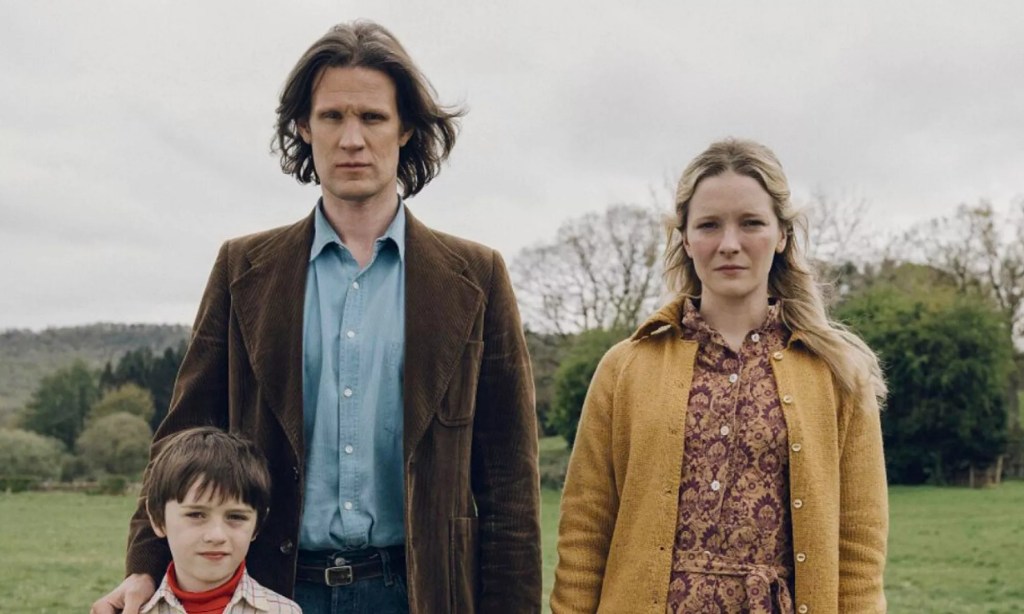
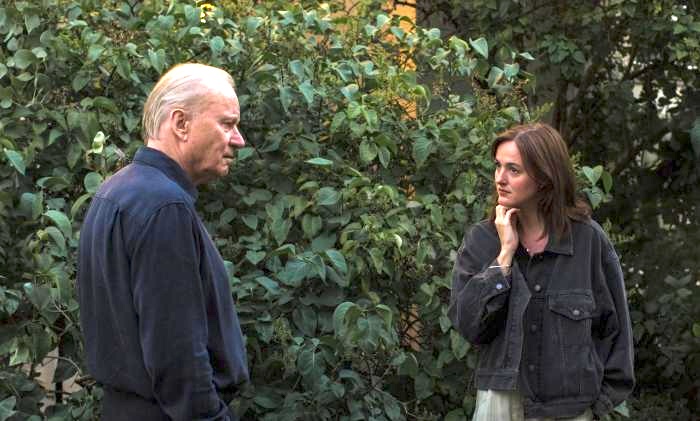
The British countryside has always acted as an environment full of curiosity and gloom. It is vast, unmonitored territory, a perfect landscape for superstition and ancient practices to take place. Starve Acre is the new BFI funded folk horror written and directed by Daniel Kokotajlo, based on Andrew Michael Hurley’s acclaimed novel. Richard (Matt Smith), an archaeologist, and Juliette (Morfydd Clark) live in Richard’s rural family home with their son Owen (Arthur Shaw). Things start to go awry when Owen starts to hear whistling sounds, and talks of a man called Jack Grey.
Steeped in grand ideas on pagan rituals and sacrifice, Starve Acre follows the cult-like beliefs of Richard’s father in his natural offerings to the spiritual realm, and we see how his actions haunt Richard and his family. Following a series of medical tests carried out on Owen after a violent incident at the local fayre, Owen collapses suddenly, dead on the spot. Richard gets lost in his excavation of the grounds as a distraction, as Juliette rots away in bed until her sister Harrie (Erin Richards) arrives to check in on the couple. The setup is intriguing, especially as Richard begins to look into the folklore of an ancient oak tree on their land.
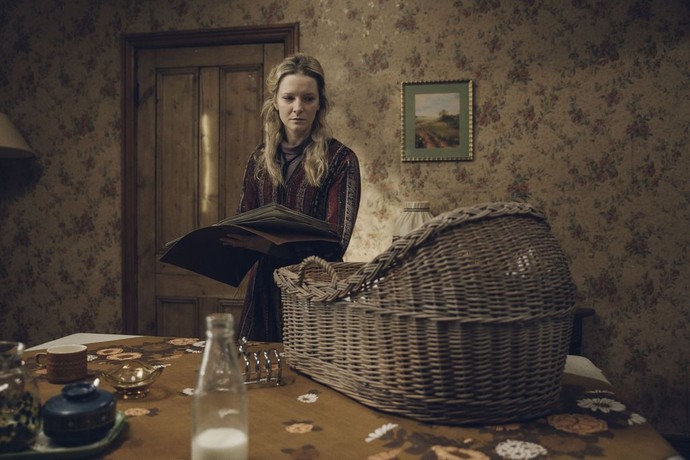
This central idea of life, loss and rebirth is embodied by the hare whose skeleton Richard finds when excavating the grounds. He starts to notice that the skeleton begins to grow veins, a nervous system and a heart. Is it real, or a figment of his imagination? Its unnerving presence keeps the plot ticking along, and the mixture of practical puppeteering and visual effects is relatively impressive, though it can look somewhat comical at times.
It’s exciting to see Matt Smith make a return to unsettling British drama films, similarly to his previous work in projects like Womb, affirming that he has a knack for selling the most bizarre of stories. It is his co-star that truly shines in Starve Acre, though. Morfydd Clark gives another spectacular performance, reminding the viewer that she is truly in her element when cast in a role that follows a woman descending into madness.
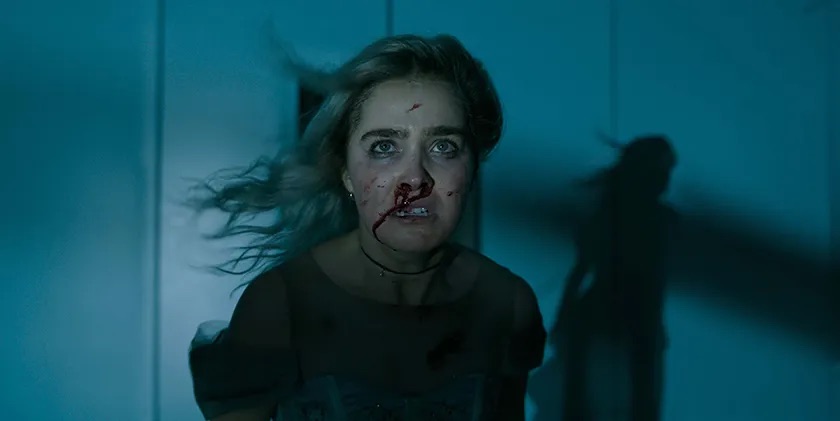
The soundscape is arguably the strongest element of the piece, keeping the viewer switched on throughout, oftentimes juxtaposing the most mundane of shots. The atmosphere is consistently tense and eerie, but the intensity never erupts in the way I was hoping. What really lets the film down is its abrupt end. I was genuinely shocked when the credits began, as I feel as though it had just gotten into its own rhythm and had been cut short. The pacing throughout was slow, and the payoff just isn’t worth its weight in gold. I want to give it credit where credit is due – the atmosphere and Morfydd’s performance are strong, and are realistically the glue that holds this film together.
Starve Acre, fundamentally, is a film about longing and loss, and the damage we can do to each other. It has a relatively strong foundation and some exciting moments, but ultimately falls far short. Its abrupt finish and lack of strong development of the plot or the central characters make it land flat on its face. There is a lot to appreciate about Starve Acre, but it’s not a film that will be sticking with me.


 Flip Screen
Leave a comment