
“A gripping and elegant performance”
Director Pablo Larraín returns with the final installment in his “accidental trilogy” of historical women, succeeding Jackie (2006) and Spencer (2021) with a film centered on famed opera singer, Maria Callas (Angelina Jolie), and her final days in 1970s Paris as she tries to find her voice again. As Larraín said during a Q&A after a screening at the New York Film Festival, at the end of a performance, Maria would usually be lying on stage after her character had already met her tragic demise before the audience erupted in applause. Just like her characters, Maria became a tragedy herself—living and dying for her art.
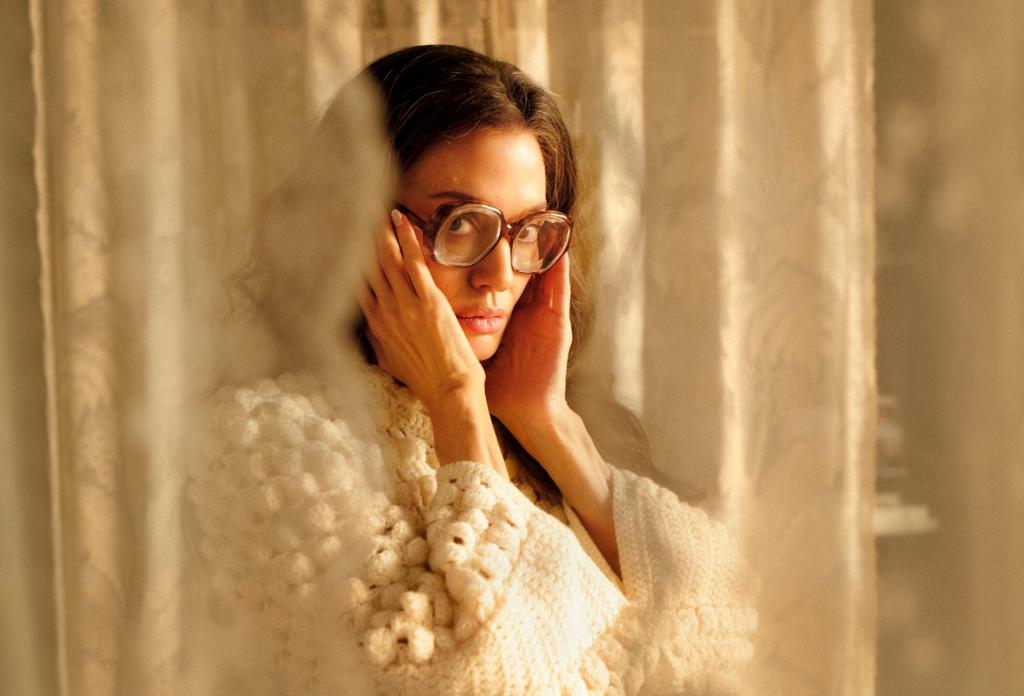
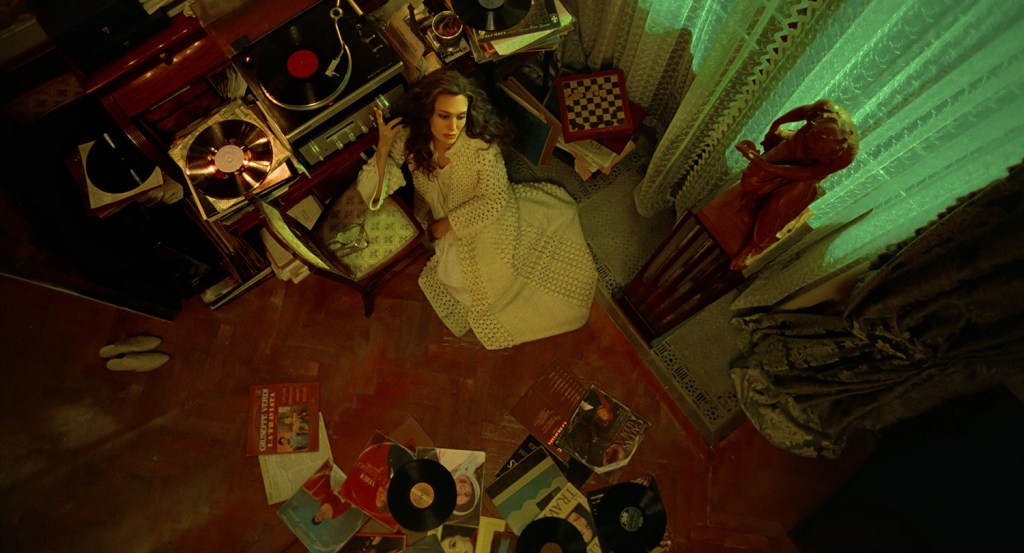
Maria blurs the line between reality and fiction in order to not only show her state of mind but also add a touch of lightness and comedy to an otherwise somber tone, which is also shown in the cinematography’s occasional playfulness. As cinematographer Edward Lachman also discussed during the Q&A, there are cuts between black and white, as well as 35mm film, in order to convey Maria’s state of mind— the difference between past and present, real and imagined. The worlds that Maria has created in her mind, where music follows her, and there is a symphony waiting for her cue as she walks about iconic Parisian landscapes. Guy Hendrix Dyas, the film’s production designer, also helped to create this heightened reality.
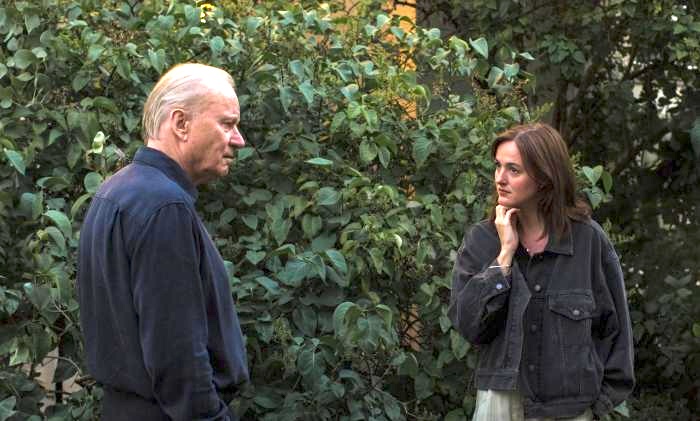
Pierfrancesco Favino as Ferruccio and Alba Rohrwacher as Bruna also bring kindness into each scene they are in alongside Jolie. Rohrwacher described her character as “Maria’s shadow,” though in the end, these characters become much more than that. There is a scene that cuts back and forth while Maria is singing in the present day to a scene from years prior where she was performing, and the two are proudly watching her from one of the boxes— witnesses to her greatness that flourished because of their friendship. And this greatness never dims. Even in her last moments, Maria sings loud enough in her home for passersby in the street below to stop and listen to her final performance. Just as they had done years before, the two sit back with tears in their eyes, knowing this is her crescendo.

Jolie is poised and graceful as Maria, even when she is in denial that her life is coming to an end, and there’s a sense of dread for what is to come. She walks around as if already mourning her life. The fact that she gets up on that stage and tries is a triumph and a true testament to her artistry, though this is something only another artist can truly understand. Opera was her entire life, but she was hidden away for years, trapped in a cage like a songbird. The climax of the film is her finally escaping from the clutches of this prison, and at last finding her voice again, even if it is at the sake of her own life— because she does not have a life if it is one without opera. This obsession is the mark of a brilliant yet tortured artist which Jolie encapsulates in a gripping and elegant performance, bravely taking the stage to embody one of the greats.

While Larraín’s direction works to set this film apart from the usual biopic, it is still not enough to save Maria from being the weakest installment in the trilogy. The work of the talented ensemble, along with the breathtaking production design and cinematography, is merely a veil used to conceal how hollow the script really is— another formulaic tale that sacrifices substance in order to condense an artist’s life into a two-hour runtime.
Dir: Pablo Larraín
Prod: Pablo Larraín, Juan de Dios Larraín, Jonas Dornbach, Lorenzo Mieli, Janine Jackowski, Maren Ade, Simone Gattoni
Cast: Angelina Jolie, Pierfrancesco Favino, Alba Rohrwacher, Kodi Smit-McPhee
Release Date: August 29, 2024
Trailer:


 Flip Screen
Leave a comment