We may already be a few months into 2025, but staff writer Rebecca Rosén is here to share a list of some highlights from the previous year in film! Read on to find out what her top picks were, and be sure to check out editor-in-chief Hayley Paskevich‘s list as well…
A Different Man (dir. Aaron Schimberg)
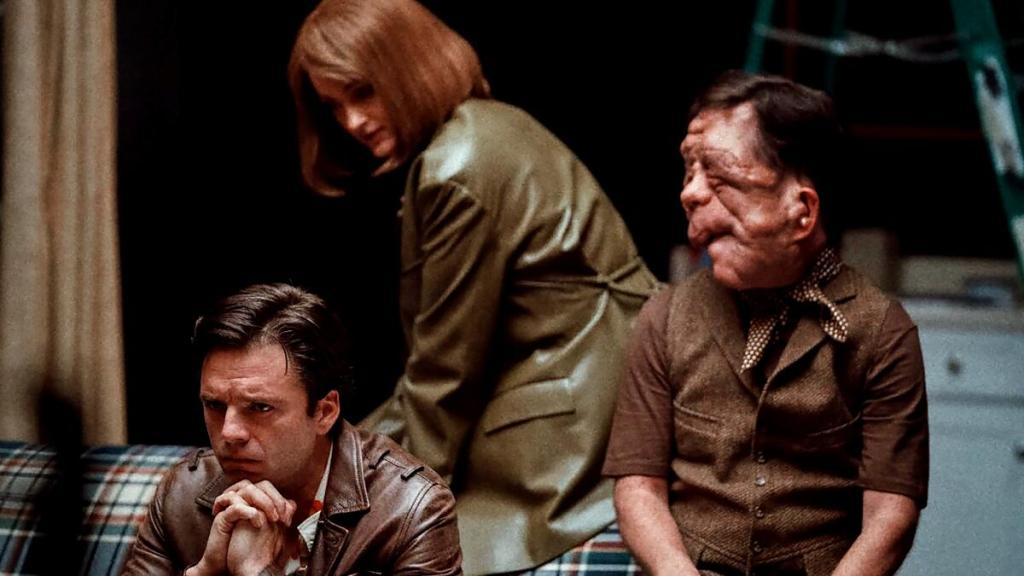
Written and directed by Aaron Schimberg, A Different Man delivers both comedy and razor-sharp commentary when exploring ideas of beauty, identity and self-worth. Aspiring actor Edward (Sebastian Stan) undergoes an experimental medical procedure to remove his neurofibromatosis and alter his facial appearance— only for his new life to turn nightmarish when he meets Oswald (Adam Pearson) and misses out on the role he was born to play. For a lesser writer, it could’ve been tempting to end with the conclusion that people should love themselves regardless of appearance. Thankfully, Schimberg’s writing is too intelligent to lean into convenient clichés. Besides a clever script and gorgeous cinematography, the film’s greatness is enhanced by the acting performances. The tweaks Stan makes in his physicality, as well as how he captures Edward’s insecurity and growing resentment, are enthralling. Similarly impressive, as soon as Pearson appears on screen, he does so with effortless suave that charms characters and audiences alike. Oswald is everything Edward isn’t— confident, charismatic and, above all else, comfortable in his skin. To live a life entrenched in self-hatred, only to realise that others live fulfilling lives under similar circumstances, is a brutal but also wholly entertaining concept.
All We Imagine as Light (dir. Payal Kapadia)
Payal Kapadia’s fiction feature debut is a tender illustration of the everyday—of the big and small moments that encapsulate everything being alive entails. The combination of Kapadia’s tender script and the subtly powerful acting performances by Kani Kusruti, Divya Prabha and Chhaya Kadam give viewers a profound exploration of sisterhood, in all its complexities and splendour. The film revolves around the lives of three women, roommates Prabha (Kusruti) and Anu (Prabha), who work together as nurses in a city hospital, as well as their co-worker Parvaty (Kadam). Prabha’s everyday routine is uprooted when she receives an unexpected gift from her estranged husband who lives in Germany. Simultaneously, Anu tries in vain to find a spot in the city where she can be intimate with her secret boyfriend and Parvarty is abruptly forced out of her home. During its runtime, the film uncovers the inner worlds of these women to acknowledge how they differ but, most importantly, how alike they are in the emotions they experience. All We Imagine as Light rewards the patient viewer with fleshed-out characters, social commentary concerning systems of oppression and overall visual poetry.
Challengers (dir. Luca Guadagnino)
Challengers sees Zendaya as Tashi, a former tennis prodigy turned coach after a gruesome injury. Married to Art (Mike Faist), a champion on a losing streak, Tashi’s game plan for her husband’s resurgence takes an unforeseen twist when he finds himself standing across the net from Patrick (Josh O’Connor), his former best friend and Tashi’s ex-boyfriend. Any fan knows how scarce excellent depictions of sports are on the big screen, which is why it’s understandable that this film created a craze—it’s one of few sports films that attracts fans and non-fans alike. The film, directed by Luca Guadagnino and written by Justin Kuritzkes, isn’t interested in using tennis solely as a vehicle to create drama. Instead, it’s fully integrated throughout to explore what tennis means specifically to these characters. Challengers is a film where every component is finely tuned, including the dynamic editing, audacious acting choices and the pulsating score. A heady combination of desire, power plays and sexual tension, it’s an enticing film about the lengths one might go to watch some good tennis—and, with every bead of sweat and grunt, viewers will feel just as invested as the characters.
His Three Daughters (dir. Azazel Jacobs)
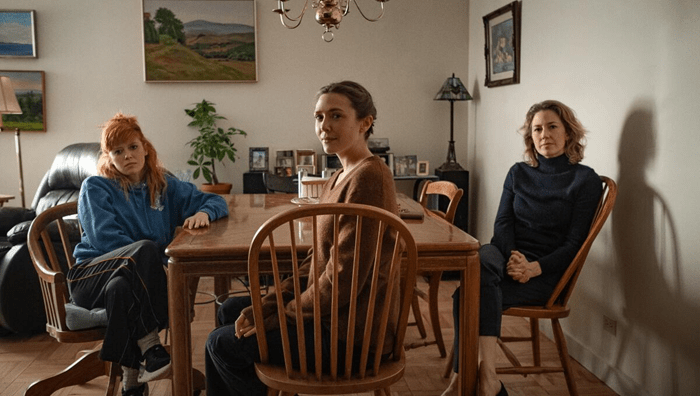
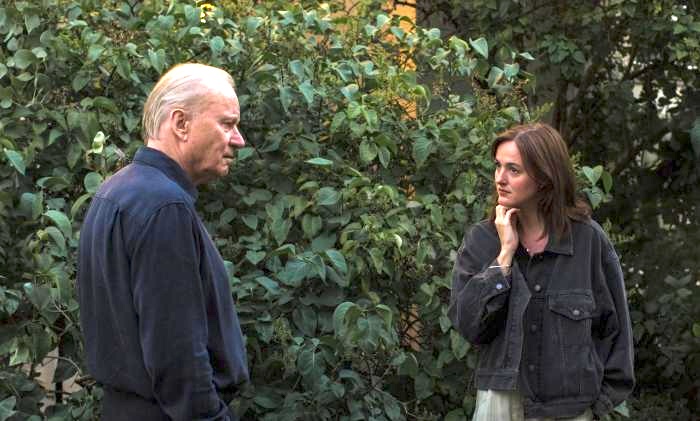
No matter how much one tries to prepare, grief never unravels how one expects it to. Written and directed by Azazel Jacobs, His Three Daughters sees Carrie Coon, Natasha Lyonne and Elizabeth Olsen as three estranged sisters who reunite to care for their ailing father. Despite its unmistakable grievous factor, there’s something surprisingly healing about how the story unravels. A drama with heartfelt performances by its perfectly cast leading trio, His Three Daughters impressively traverses the tricky emotional reality of the situation without ever feeling too sentimental. Grief, a universal yet simultaneously deeply individual experience, is here more realistically captured through the contrasting experiences of three distinct individuals who all react differently to the situation. As they attempt to navigate uncharted territory together for the first time in years, lingering feelings creep to the surface as the situation gets increasingly more intense—further emphasised by the fact that the apartment where most of the film unravels feels increasingly claustrophobic. Sublime in its simplicity, His Three Daughters is a beautifully aching chamber piece that explores the intricacy of distress through unpretentious performances.
Hit Man (dir. Richard Linklater)
Hit Man sees Richard Linklater and Glen Powell reunite in a film that takes full advantage of the latter’s charisma. Powell portrays Gary, a mild-mannered psychology and philosophy professor who assists the New Orleans Police Department in sting operations. When unwillingly ushered into the role of portraying a fake hitman to solicit and then stop murder-for-hire plans, things quickly turn morally questionable when Gary finds himself attracted to Madison (Adria Arjona), one of the people he encounters during his undercover work. As she falls for one of Gary’s guises, their entanglement sets off a chain reaction of duplicity, pretending, and increasingly higher stakes. Directed by Linklater, with a screenplay by Linklater and Powell, Hit Man is less about the big laughs and more about an irresistible good time. Its allure is primarily derived from the palpable chemistry between Powell and Arjona and how enjoyable it is to watch them riff off each other, as well as how Powell, like a chameleon, moves between his different personas. Besides the leading duo, Austin Amelio does some truly admirable and delightful work whenever he emerges that deserves equal amounts of acclaim.
La Chimera (dir. Alice Rohrwacher)
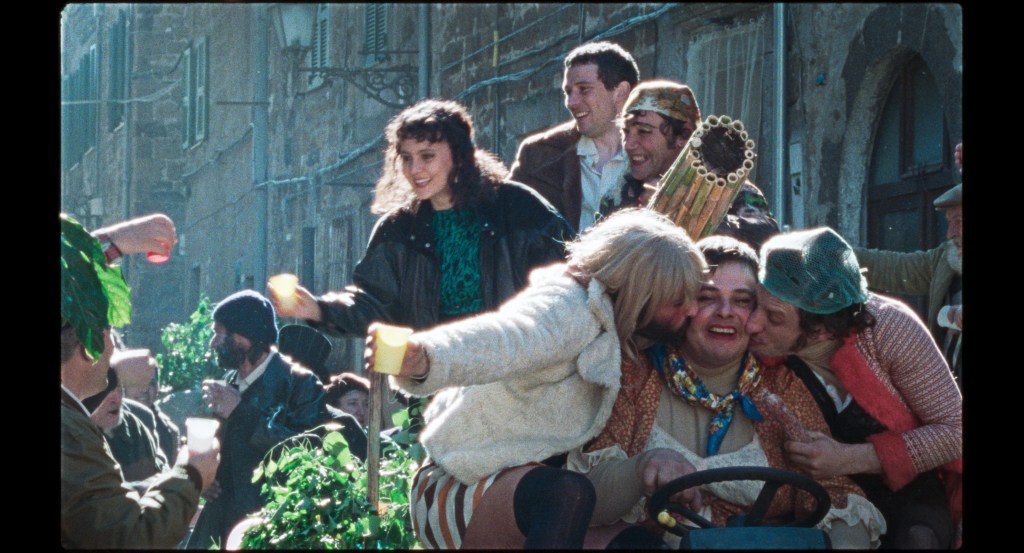
Alice Rohrwacher’s enchanting La Chimera sees Josh O’Connor as Arthur, a former archaeologist, who reconnects with a crew of charismatic tombaroli who loot Etruscan tombs in search of treasures. Is the buried for the living? Should the past stay contained? The film asks these questions abstractly, but also in terms of the more tangible idea of treasures of the past versus the profit-focused present. Whether it’s the nostalgic grainy imagery—a blend of subdued earthy tones with the occasional splash of vibrant colours—or the human search for something—fortune, meaning or something bigger—there’s something deeply romantic about the film. The combination of Rohrwacher’s engrossing storytelling and Hélène Louvart’s cinematography create an immersive universe with loads of texture and personality. Experimenting with aspect ratios and no less than three film formats, the film’s blurring blend of reality with fantasy comes across as dreamy. With characters as lived-in as Arthur’s linen suit and charmingly sun-drenched imagery, La Chimera is an otherworldly experience. Rohrwacher’s mix of the everyday with the elevated gives viewers something magical to fall in love with, the kind of film one walks out of feeling like life is a little better than it was before.
My First Film (dir. Zia Anger)
Directed by Zia Anger, from a screenplay by Anger and Billy Feldman, My First Film sees young filmmaker Vita (Odessa Young) recounting the chaos surrounding the attempt to make her first feature years prior. Vita is eager and enthusiastic but also highly inexperienced, which causes alienation among the crew and the entire production to spiral into a tumultuous mess. In general, spending time pursuing the arts often turns out to be more about giving rather than receiving. My First Film examines whether the creative quest is worth it, as there’s usually a price to pay and nothing is ever guaranteed. How can one ever find the motivation to keep going, knowing all this before even starting? Anger’s film is a meta-textual ode to the messiness of creation—artistic or not—and the reality of what it means when things don’t turn out as expected. Initially, one might feel thrown off by the film’s bluntness. However, due to its grounded approach, the film avoids feeling too on the nose in its blend of life and art. It might not always be subtle, but it draws the viewer in by being thoroughly genuine.
The Beast (dir. Bertrand Bonello)
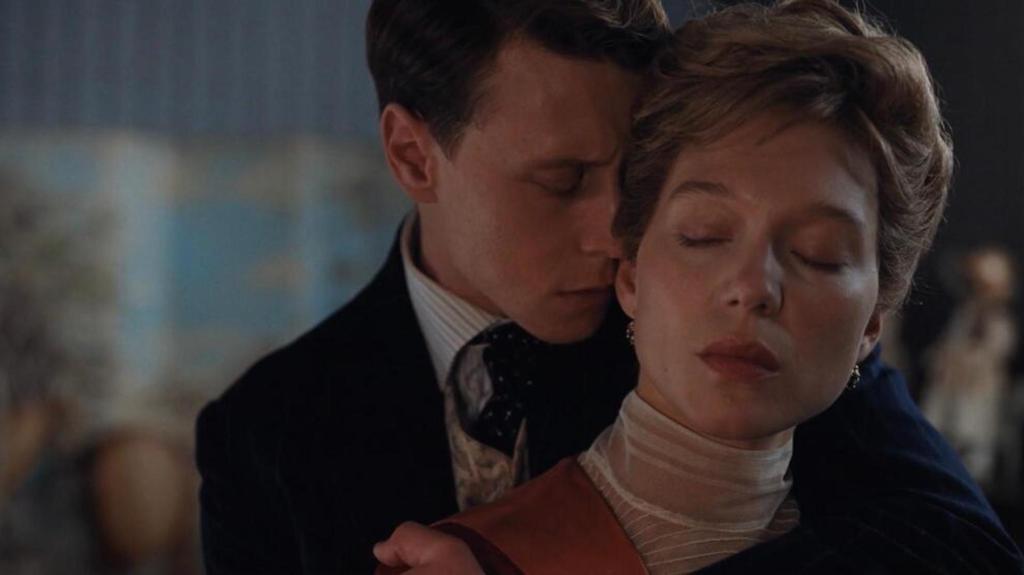
Loosely based on Henry James’s 1903 novella The Beast in the Jungle, Bertrand Bonello’s latest skillfully blends drama, horror and science fiction to craft an equally beautiful and distressing film that explores what it means to be alive. In a future where artificial intelligence reigns and human emotions are considered a liability, Gabrielle (Léa Seydoux) agrees to undergo a procedure that purifies her DNA by unlocking past lives to suppress emotions. As Gabrielle’s procedure begins, viewers join her as she relives the aches and pleasures of life in 1910, 2014, and 2044—including a time-spanning connection with Louis (George MacKay), another purification candidate. Besides exploring the lengths people are willing to go to deny the parts that make them human, the film features noteworthy acting from its leading duo. The subtle yet powerful Seydoux gives a career-best performance, and the malleable MacKay proves to be just as compelling when he eerily moves between his vastly contrasting variations of Louis. Come for the worldbuilding, stay for the acting performances and the fact that Roy Orbison’s “Evergreen” will never sound the same.
The Iron Claw (dir. Sean Durkin)
Written and directed by Sean Durkin, The Iron Claw portrays the highs and lows of the Von Erich brothers from 1979 to the early 1990s. Portrayed by Zac Efron, Jeremy Allen White, Harris Dickinson and Stanley Simons, the brothers quickly realise that the pursuit of success within the competitive world of professional wrestling is nothing compared to the task of trying to satisfy their domineering father and coach (Holt McCallany)—a man who gladly pits his sons against one another and isn’t shy to vocalise which one is his current favourite. The Iron Claw offers viewers both devastation and glimpses of bliss—a mix of affectionate camaraderie and bursts of happiness along with depictions of abuse, parental pressures, and toxic masculinity. These contrasts also reveal themselves within the sons themselves, physically indomitable men who are simultaneously at their most vulnerable. Although memorable acting performances all around, Efron is particularly striking. Beneath the muscles, there’s a notable tenderness to his portrayal and the weight his character carries becomes increasingly palpable—proving that the pain suffered within the ring is nothing compared to the pain experienced outside of it.
Vermiglio (dir. Maura Delpero)
Instead of relying on theatrics, Maura Delpero’s second feature is about the little things that make a great impact—including the shaking of a hand, a glance, and little notes. During the waning days of World War II, a village’s solitude is disrupted by the arrival of two deserters, one of them a son of the area and the other a stranger from Sicily. When a family offers the Sicilian (Giuseppe De Domenico) shelter, curiosity rises, not least from the eldest daughter (Martina Scrinzi). However, burgeoning love is quickly replaced by devastation. Vermiglio is a portrait of a community, a place where time—for better and worse—appears to stand still. Particular attention is shown to the girls and women and how they dream of being heard and seen as they are and not solely as what is expected of them. However, the most enchanting detail of Vermiglio is its rich visual expression. Using natural light, cinematographer Mikhail Krichman captures the poetry of the stunning northern Italian mountain setting. From chilly winter, with thick snow weighing down trees, to the burgeoning spring with its blue skies, rippling water and greenery, it’s a character in and of itself.


 Flip Screen
Leave a comment