
As part of Flip Screen’s coverage for this year’s Scottish Queer International Film Festival (SQIFF), I was given the opportunity to watch some screeners of several of the titles being shown throughout the event. It was imperative to me to look at a diverse selection of films representative of a vast spectrum of queer experiences— one that reflects various cultures, sociopolitical realities, and individual stories. First up, I have written about several of the shorts featured in the aptly titled programme NO PRIDE IN GENOCIDE, which had a sold out in-person screening and discussion on Wednesday at the festival. The SQIFF website summarizes this grouping of films as follows:
“Featuring urgent works from Palestine, the diaspora, and Lebanon, this programme gathers stories of queer love, loss, resistance, and survival.”
Unfortunately, I wasn’t able to see one of the shorts in this package— Canadian filmmaker Teyama Alkamli’s I Never Promised You a Jasmine Garden, about an Arab woman who has feelings for her best friend she attempts to suppress over the phone. However, I was able to watch both Blood Like Water (2023) and Cinema Fouad (1993), and found it worthwhile to discuss both of these shorts in conversation with one another, as there is a stark contrast between them.
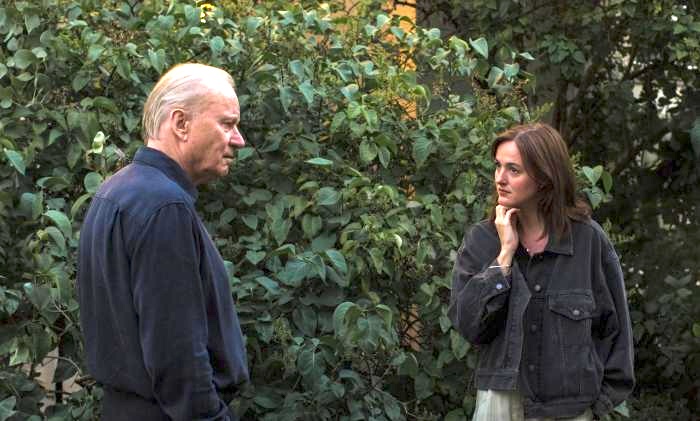
Written and directed by Dima Hamdan, Blood Like Water is a fictional narrative that centers on a closeted Palestinian man whose homosexuality is weaponized by the Israeli forces. After sharing a passionate night with a man named Raed, Shadi (Atalah Tannous) finds himself outed over the phone, with their sexual relations recorded and an Israeli officer threatening to leak the footage for everyone to see. The short’s title comes from the adage “blood is thicker than water,” so it’s not surprising that family plays a central role in it.
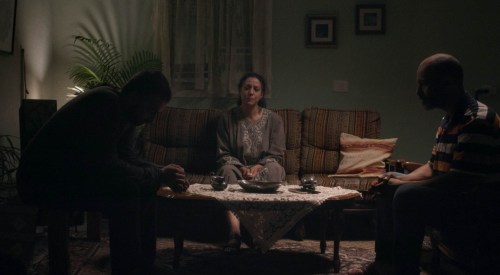
Shadi and his parents are the only characters seen on screen, grappling with the revelation of Shadi’s queerness in the midst of this true to life sociopolitical turmoil. His father Abu Shadi (Adeeb Safadi) is quick to react with anger, as he would rather his son be outed to the town than cooperate with the Israeli occupation himself. Meanwhile his mother Um Shadi (Ruba Blal) struggles with her own understanding but comes from a place of compassion. Much of the short takes place in the darkness which is a creative choice justified by the narrative as Shadi shuts himself away from the world.
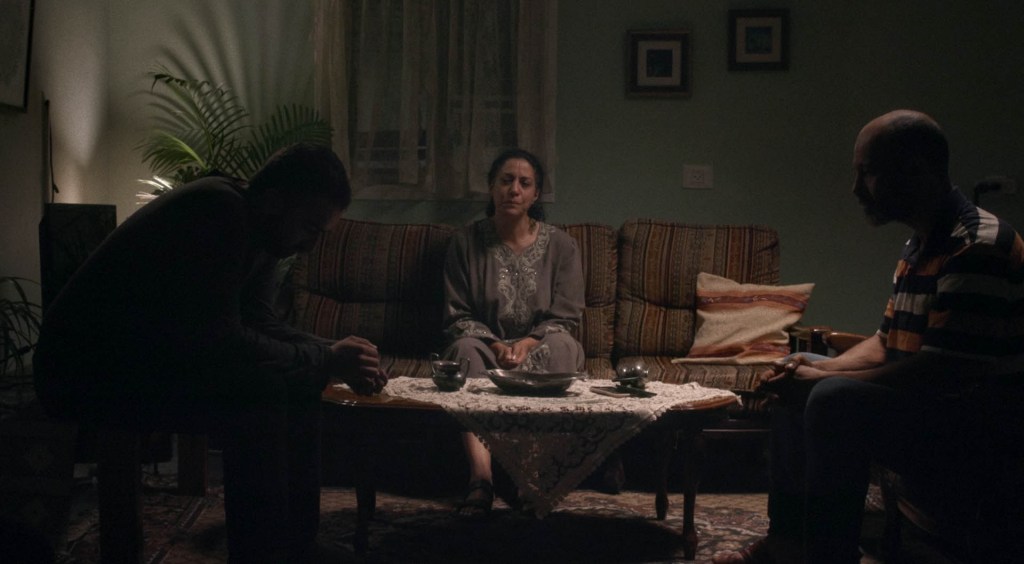
His hopelessness is conveyed through the screen as he makes himself intentionally less visible, Tannous portraying this fearfulness and distress with heartbreaking sincerity. There is a particularly powerful and symbolic shot near the end where Shadi and his father are seen in shadow on opposite sides of the room while Shadi’s mother sits on a couch between them, illuminated by the light. While Blood Like Water can be an uncomfortable watch given the harshness of the language used and violent moments of physical intensity, it is nevertheless an important one.
Cinema Fouad may not be as recent of a film but its inclusion in this programme still feels strikingly relevant, also bringing audiences into a domestic space where uncomfortable conversation occurs. Over the course of Mohamed Soueid’s 41-minute documentary, trans Syrian freedom fighter Oscar Al-Halabiye reflects on various aspects of her life and identity in a back-and-forth dialogue with the interviewer. The camera stays trained on her throughout and Al-Halabiye’s confidence in her gender identity as well as her passion for expressing herself through dance is evident. However, she doesn’t shy away from addressing the social realities of doing so while living as the gender she was assigned at birth, reflecting on the cultural difference in the way she would be perceived.
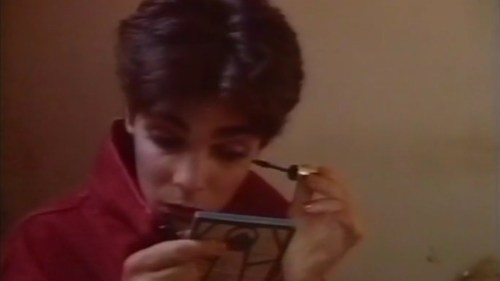
Al-Halabiye makes it clear to both interviewer and audience alike that she is much more comfortable living her life in Lebanon as a woman and feels closely aligned with femininity, even discussing future plans to get breast augmentation surgery. She also talks about her attraction to men rather than other women and speaks of a male lover from Palestine whose life was tragically taken. With this context in mind, at times the interviewer’s questions can feel quite intrusive and invalidating of Al-Halabiye. One such moment occurs during a discussion about film and the formative impact it has had in Al-Halabiye’s life, where it is revealed the documentary is named after a cinema she has fond memories of attending. “Women or cinema?” the interviewer asks. Al-Halabiye responds with surprise, unsure why such a question would be asked of her and eventually replying that both things have their functions.
Unsettlingly enough, this isn’t the only time the filmmaker asks Al-Halabiye about women. He later inquires what it is about a particular female cinema icon’s face that she most enjoys, receiving a similarly perplexed response. It feels as though the interviewer has a limited understanding of what Al-Halabiye’s personal experience of being a trans woman means in relation to her sexuality, and her awkward pauses while attempting to answer such questions speak volumes. Despite this barrier created between documentarian and subject, Al-Halabiye’s constant presence and interesting background makes Cinema Fouad engaging. And while Al-Halabiye took part in the Palestinian resistance, there is little information about her publicly available outside of what she shares in this documentary, making it a unique window into her life at this specific point in time.


 Flip Screen
Leave a comment