As part of Flip Screen’s coverage for this year’s Scottish Queer International Film Festival (SQIFF), I had the chance to attend one of the shorts programmes on Saturday afternoon. It was imperative to me to look at a diverse selection of films representative of a vast spectrum of queer experiences— one that reflects various cultures, sociopolitical realities, and individual stories. This is exactly why the QUEERLY BELOVED strand felt like the perfect choice, as the films featured fulfilled all of this criteria while focusing on queer joy and resilience through comedic shorts. The programme introduction emphasized the communal nature of comedy, reflecting on how its success depends on people’s collective laughter and enjoyment within a shared space. Audiences were then treated to a short stand-up routine from Glasgow comedian Kathleen Hughes, providing some good laughs even before the short films got underway.
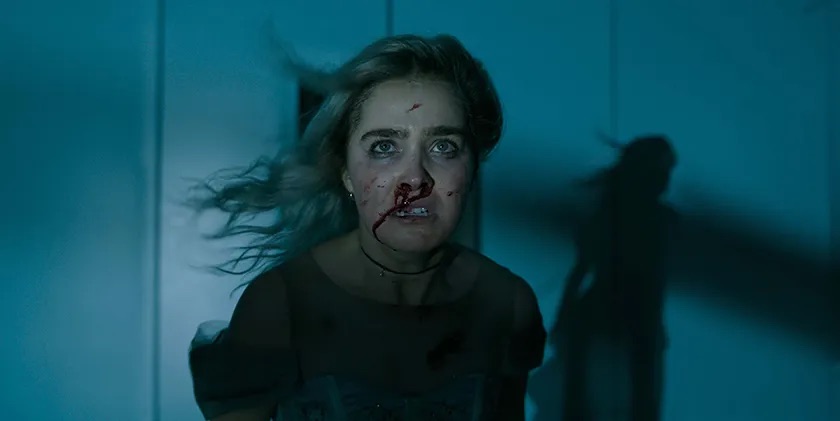
The definite standout within the programme was Charlotte Cooper’s filmmaking debut Bury Your Gays, a highly entertaining send-up of the infamous titular trope that refers to queer character death in media. In the Iris Prize shortlisted film, which is streaming on Channel 4, an actress named Grace (Jude Mack) finds herself on her fictional deathbed while filming an emotional scene with her co-star Clara (Sophie Melville). When she questions why her character is suddenly being killed off, this opens a literal door into a liminal space, where Grace meets The Agent (T’Nia Miller), a mysterious authoritative figure dressed in a white suit. The Agent informs Grace that her characters died because they were all gay, and that she has now entered “Hollywood’s queer purgatory,” with only a few lives left before she’s doomed to a fate worse than death— being permanently relegated to the role of ‘gay best friend’.
While most of us know the “bury your gays” trope all too well after watching so many of our beloved LGBTQ+ characters suffer their demise at its hands, those who may not be familiar are quickly brought up to speed. As Grace soon discovers, no genre is truly safe— not even the Christmas film, which has seen an uptick of queer romances in recent years. The script is cleverly written and does an excellent job of satirizing how ubiquitous queer tragedy has become while asking what would happen if we dared to change these endings instead of simply accepting them. There are also some creative technical aspects thanks to the short’s meta-reflexive nature, with the screen appearing to glitch or the scene resetting during self-aware moments while the cameras roll. It would be great to see Bury Your Gays expand into a feature film, allowing Cooper to develop the concept beyond a 20-minute runtime like she hopes to do, as it feels there’s plenty of potential to take this story even further.
The rest of the programme also brought something unique to the table, with a variety of short films that feature their characters’ LGBTQ+ identity at the forefront, often with unexpected and humorous outcomes. From the simplistic to the surreal, the heartfelt to the horrifying—and everything in between—there was certainly no shortage of laughs when these films were screened. The briefest of these offerings, Cal Freeman’s ASL, depicts an initially awkward moment between 19-year-old Rulf (Jack Carlin) and the nearly twice his age Ziggy (Oliver Devoti). While the two men have met to hook up in a car park, there is an evident personality clash, which is due to the differences in how they express their sexuality as Rulf is a loud and proud gay teenager, But after the car radio is responsible for a surprisingly comedic moment, the uncomfortableness between them gives way to eventual sexual tension.
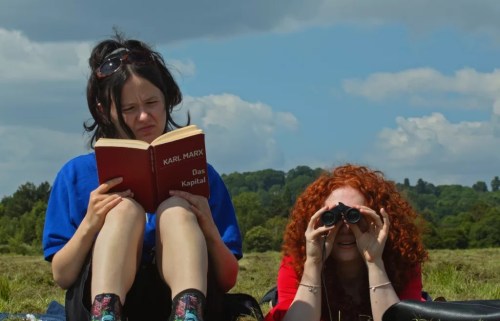
In the cleverly titled Bi-nocular Panic, audiences are treated to a humorous exploration of same-sex attraction, courtesy of two friends who partake in some beach voyeurism. Anouk Witowska Hiffle’s short sees Jane (Lucy Keane) and Cass (Albertine Sins) watching volleyball players from afar as they lounge on the grass. It soon becomes apparent only one of them is there for the shirtless men— the slo-mo shots of Melody (Vanessa Eng) from Cass’s perspective say everything. While the girls run off when they get caught staring and Cass downplays her true feelings, she later has a sweet meet-cute with Melody while Jane hits it off with Hank (Luke Azille). Cliché as it may be, it’s a simple and charming little film that fits nicely into the programme, affirmative of young burgeoning sapphic desire.
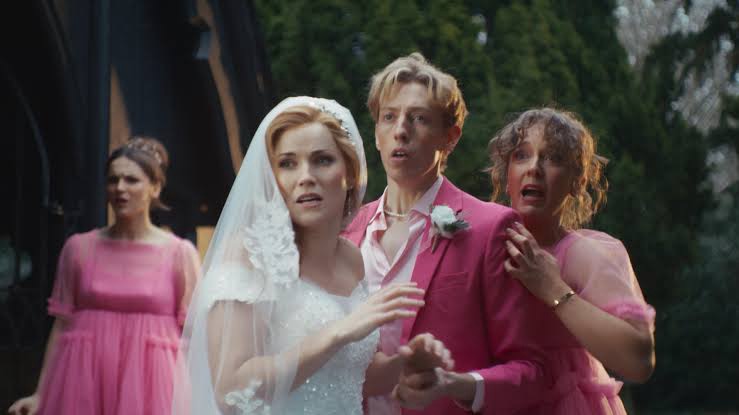
Canadian filmmaker Mo Matton’s Gender Reveal pokes fun at a celebration steeped in cisgender patriarchal tradition, turning it on its head by adding a polyamorous non-binary trio into the mix. When Rhys (Ayo Tsalithaba) brings their partners Mati (Alex Miron Dauphin) and Ting (Ke Xin Li) to boss Chloe’s (Lauren Beatty) party for her unborn child’s soon-to-be-announced gender identity, things get a bit chaotic. Most of the 13-minute long short plays out like an unconventional queer comedy, with much of its humour derived from the campiness of its characters and the repeated misuse of “they” as a pronoun. However, it soon descends into full-tilt horror when the reveal goes awry, a sudden genre pivot sure to elicit both shocked laughter and gasps alike.
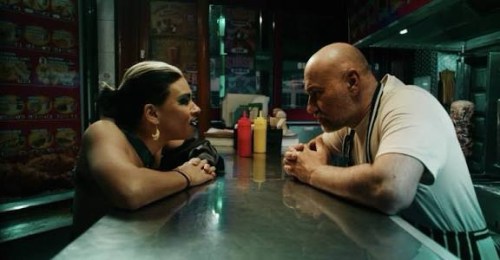
Challenging the norm through the queerness of gender expression is also a main theme of Weili Hsing’s Sriracha. The short focuses on the conflict between two very different individuals—traditional Turkish kebab shop owner Hamza (Jem Kai Olsen) and brazen young drag king Li (Jacqui Bardelang), who wants to add sriracha to his kebab. Hamza angrily refuses this and repeatedly states “it’s not normal,” a loaded remark that feels like it has to do with more than just Li’s choice of condiment. However, this initial cultural clash takes a backseat when hoodlums wreak havoc in the shop, leading to both chaos and a shift in perspective. It feels fitting that an unlikely kinship forms over the same food that first caused division, creating a heartwarming moment that comes full circle.
The last film in the programme, Maz Murray’s Principal Boy, presents some interesting ideas when it comes to the act of queering gender through performance. Starring Juliette Motamed—who viewers might recognize from the British comedy series We Are Lady Parts—the short aims to explore the interplay between queer gender identity and pantomime. However, it lacks a clear narrative direction and is difficult to follow beyond a tenuous grasp of its central theme, making it unclear where reality begins and theatre ends. On a positive note, the short culminates in a fun moment of unabashed queer joy, with a musical performance courtesy of Motamed and the other theatre performers.
Glasgow-based performance artist Craig Manson then gave audiences a memorable cabaret routine about dying—or rather, killing—to receive funding from the Scottish creative arts industry, performed in drag as the character “Bunny”. Strutting around in a blonde wig and a shiny gold dress, “Bunny” put on a darkly satirical show that detailed just how far she went in order to make the big time, including musical parodies of songs like “Part of Your World” and “Rose’s Turn”. Manson’s high-energy performance was well-received by those who stuck around to see it, with a gleefully macabre narrative and a smattering of laughs when several beloved Scottish actors were name dropped.
The decision to bookend the programme with a live performance element felt exciting and fresh as this made it more than a typical film screening. Overall it was a highly entertaining couple of hours, and sharing in an afternoon of queer joy made for a positive and uplifting experience, one that emphasizes the need for these kinds of narratives to exist alongside the queer tragedies we are so often presented with.


 Flip Screen
Leave a comment