
‘Happy families are all alike; every unhappy family is unhappy in its own way’ – Leo Tolstoy, Anna Karenina
Films about family can be some of the rawest, most moving and most therapy-inducing stories (See Aftersun, Petite Maman and His Three Daughters for some other recent examples). Joachim Trier’s Sentimental Value joins the club of films that make you re-examine the very formation of your identity and really think about how influential your earliest relationships can be. It is another example of one of Trier’s most beautiful filmmaking qualities – creating films that are genuinely invested in their characters and the relationships between them; ones that feel like a window into a person’s life and every emotion they may be experiencing, encouraging the audience to experience these alongside them.
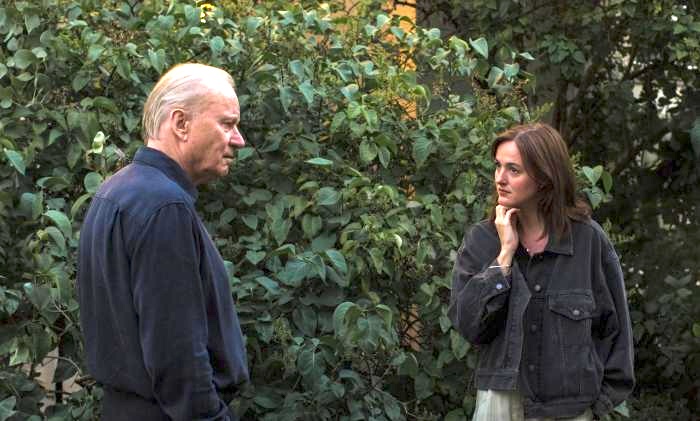
Following on from The Worst Person in the World (2021), an introspective character study that also combines the talents of Trier, his writing companion Eskil Vogt and their spellbinding leading lady Renate Reinsve, Sentimental Value unpacks the complex relationships between two sisters and their estranged father following his sudden reappearance at their mother’s funeral. Their father, Gustav (Stellan Skarsgård), a film director who hasn’t seen success in over a decade, barrels into their lives with a proposition for his eldest daughter, Nora (Reinsve), a prominent theatre actress whose resentment towards her father is palpable. Gustav pitches Nora a role in his upcoming film, loosely based on his relationship with his mother who took her own life in the very house his daughters grew up in. Sensing this to be just another example of Gustav’s selfish treatment of his daughters and ignorance towards the hurt he has caused them, rather than viewing this professional partnership as the secret to healing their father–daughter relationship, Nora refuses Gustav’s offer. Choosing to persevere with the project anyway, Gustav casts the high-profile American celebrity Rachel Kemp (Elle Fanning) in the role. As filming progresses, it becomes apparent how Gustav’s script parallels the characters’ own lives, and it is through both fiction and reality that the audience learns more about these characters and their relationships, as they begin unpacking these for themselves.
Trier introduces the audience to the film’s principal characters through the lens of the house that they all once shared. By opening the story with gorgeous shots of a house you could believe was taken straight from a fairy tale, their home is constructed almost as a character in its own right, the ever-present witness to the family’s shared history and as much a part of this familial unit as they are. It acts as a constant feature throughout generations of the Borg family, observing the evolution, patterns and nuances of family life. It is the family’s past, represented by the house, that binds these characters, but it is the future of their relationships and the future of the house that is at stake, and this is what Trier thoughtfully explores with the film’s delicate narrative.

My parents will soon be selling my childhood home, and I love my sister more than anything, so it makes a lot of sense that this film really struck a chord with me. Sentimental Value dives into the reality of what love means within a family, whether this can ever truly be unconditional, and how forgiveness is often both harder and easier towards those closest to you. Trier once again constructs characters who are both believable and relatable, whose relationships feel lived-in and fraught with intricacy.
The film’s portrayal of sisterhood is the most impactful I have seen in recent years and is a refreshing spotlight on the unique bond that siblings share. As much as this film is about the dynamic between an absent father returning to the lives of his grown-up daughters, it is also intrinsically about siblings who have known each other their whole lives and the formative moments they have shared (though potentially experienced differently). It reminds us that no two people’s experiences are the same. They can be raised in the exact same household, by the same people, and yet have vastly different perspectives of that time of their lives. Agnes (Inga Ibsdotter Lilleaas) poignantly declares, ‘We didn’t have the same childhood, I had you’, perfectly encapsulating the different roles siblings assume within a family dynamic, and why the sisters’ relationships with their father may differ. As the elder sister, Nora inhabits the role of protector over her younger sibling and shields Agnes from bearing this weight. Interestingly, it is Agnes who has found control and stability in her life and Nora who confesses to being ‘80% fucked up’. I found it really interesting how I related to the sisters differently in different moments and how their roles within this sibling dynamic evolve over time. Agnes’s life has followed the traditional route of having a house, a husband and child, while her sister is navigating unstable and unattainable romantic relationships and battles anxiety in her job. Agnes expresses concern for her sister, worrying that she is lonely and observing the toll their father’s return is taking on her. She is the one who is now looking out for her sibling and it is through this pivotal scene towards the film’s conclusion that Nora is persuaded to read Gustav’s script and re-evaluate her perception of the situation.
Family is at the centre of Sentimental Value, as is the power of cinema and the cathartic experience of making art. It becomes evident throughout the film why Gustav was so eager to have his daughter take on this role, as the true history of the family is embedded into the very essence of Gustav’s script. Despite dyeing her hair and adopting a Norwegian accent, Rachel is never fully able to embody the true pain and emotion of the character she is playing. The contrast between her and Nora’s readings of the same scene expertly drive this point home. It conveys the depth of their history, and the nuances to every family that can only be truly understood by those within them.
Sentimental Value is a beautifully moving portrayal of the complexities of every family dynamic. Its ending is one full of hope and possibility, without implying that these relationships are instantly fixed. It hints at the journey towards healing and understanding one another, as empathetic as it is melancholic.




 Flip Screen
Leave a comment