
”Brings a personal touch to the mother-daughter relationship”
At some point while growing up, everyone realizes that their parents aren’t just their parents. They’re people with their own dreams, passions, and a set of problems that just happened to have a kid, or a few. It’s quite literally a canon event in desi households hence no one can interfere. Some even discover, to their horror, how flawed their parents can be, or have been all along. But in the process of discovering this, they also realize how similar their coming-of-age experience can be to that of their parents— at least to some extent.
Set across Karachi and Canada, and told in flashbacks, Fawzia Mirza’s debut feature film The Queen of My Dreams follows the lives of a mother and daughter born three decades apart. Mariam (Nimra Bucha) is a charismatic mother but as conservative as you’d expect a typical brown mom to be, while her daughter Azra (Amrit Kaur) is a rebellious 22-year-old aspiring actress who lives in Canada with her girlfriend.
The core relationship between Mariam and Azra is the central aspect of the story. During a phone call with her daughter towards the beginning of the movie, Mariam can be seen getting into an argument about Azra’s decision to pursue an MFA for acting. “Shakespeare won’t teach you how to be a good Muslim. For that, you will have to study the life of prophets.”
There is an obvious disagreement between both of them here despite Mariam being an avid Bollywood fan in her youth, basing her entire personality around renowned actress Sharmila Tagore. Azra looks for someone or something to blame, not realizing that what stands between her and her mother is intergenerational trauma.
The attention and care that they give to each other may seem toxic from the perspective of a Pakistani woman who is close to her mother. The phone call arguments, the constant galling; in fact, they even appear to be fighting each other at Azra’s dad’s funeral. But once the audience relives Mariam’s life through Azra’s eyes, it becomes evident that despite all of this, they understand each other’s needs. Such subtle details make this concept work greatly, allowing the viewer to really resonate with the film’s authentic portrayal of the relationship between mother and daughter.
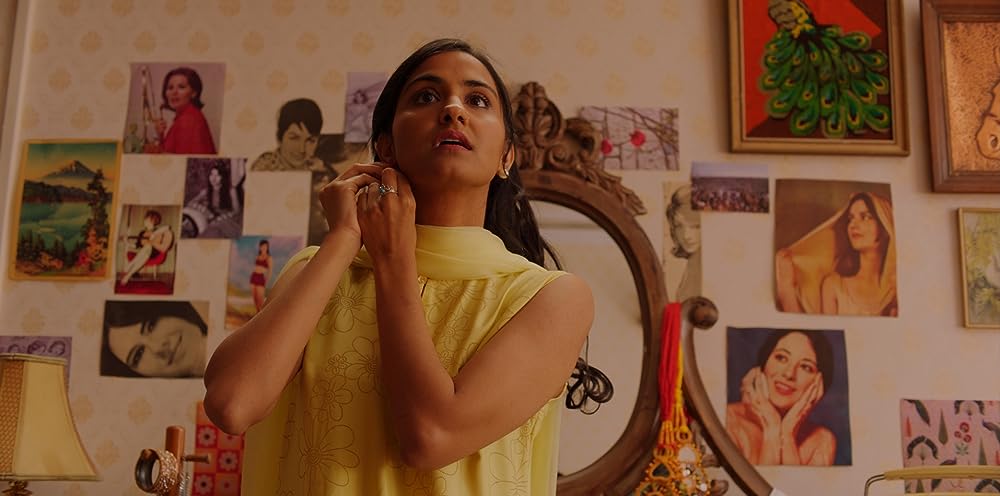
As shown in the film, mothers’ challenges and emotions often have the biggest impact on their daughters. It can be said that mothers view their daughters as a reflection of themselves, and so the daughters feel burdened as a result of that. In most Pakistani households, mothers have different expectations of their sons and daughters because of the cultural and social stigma in society.
The difference between both generations is that while the moms didn’t question the environment, the daughters of this age do. They are realizing the toxicity and negative impact of how they were raised and attempting to rebel which leads to their relations with their parents worsening. A lot of Azra’s specific experiences can resonate with Pakistani girls. From the comments Mariam makes towards Azra and her struggle to meet Mariam’s expectations, to Azra beginning to explore herself at an adolescent age, the daughter’s feelings towards her mother were valid. “Just because your mother didn’t break all generational curses, doesn’t mean she didn’t break any.”
Communication is often scarce in Pakistani households, but necessary to keep them from breaking apart. Mothers often give their children the silent treatment because they think it is stronger to put up a barrier and never appear vulnerable, as it appears weaker somehow. This is why mental health does not get addressed in Pakistan often. Strength is praised while weakness is snubbed.
While several films deal with mothers raising young children, there aren’t many that explore the challenges of being a parent to an adult child, particularly in South Asian countries like Pakistan. This lack of representation also has personal consequences when stories of desi motherhood so often a large part of an older woman’s narrative arc—remain completely invisible. If brown mother-daughter struggles aren’t given their due on screen, viewers may have a hard time understanding them as multi-dimensional people with fantasies of “paths not taken”. But messy and complex representation is crucial in order to see both characters’ sides.
The Queen of My Dreams does for Karachi what Saim Sadiq’s Joyland (2022) did for Lahore. Fawzia Mirza brings a personal touch to the mother-daughter relationship, while portraying the hustle and bustle of one of the biggest cities of the world. It’s also an incredibly colourful and saturated film through and through, depicted through the use of food, music, and other aspects of Pakistani culture. Kishore Kumar’s “Mere Sapno Ki Rani” is also a prominent highlight of the film, being used at several instances for comedic and dramatic effect. But at the end of the day, it’s the portrayal of a dysfunctional family relationship that leaves the biggest impact on the viewer.

In South Asian— especially Pakistani—culture, a lot of pressure is put on mothers and daughters to get it right. There’s the rishta (marriage) culture and maintaining a good reputation, all while following one’s religious principles. As they try to handle this pressure, all that mothers crave is validation and all that daughters expect is acceptance. Perhaps wisdom lies in accepting the fact that no matter what their children do, mothers may never be able to understand their queerness or their true selves. And their children may never understand why they’re so desperate to run past burning out. But maybe not everything needs to be understood. Maybe mother and child can just accept ourselves and each other, and slowly try to build a love language that they both understand.
In terms of promising the older generations a magical realm in which their children will be delivered to their hands matured, The Queen of My Dreams isn’t too reassuring. Nor does it promise that the younger generation secretly understands everything and it’s just a lack of communication, because it’s just not true. But there’s one thing about this story that redeems all the embarrassing moments audiences experience watching those kids do their kid stuff. Just like the kids aren’t alone in their struggle, their parents aren’t as well. So, if you love someone, just set them free—and if they love you back, they will return someday and somehow.





Leave a Reply